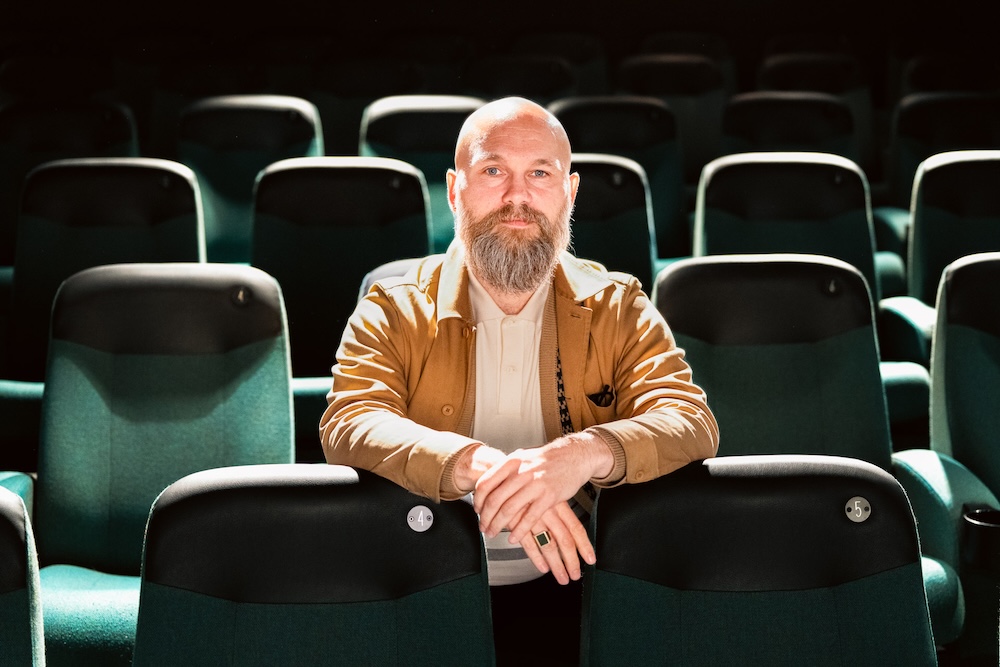
Director Búi Dam made the documentary Birita about his mother. In the film, family, arts, aging, illness and birth connect in their different forms. Birita is in competition for Nordic Council’s Film Prize.
Faroese Búi Dam is directing a play of Shakespeare’s King Lear. The lead of the play is a long-standing actress Birita Mohr. She is also the director’s mother who has Alzheimer’s disease, and is already difficult to communicate with.
Dam directed the documentary Birita about making the play. In making the documentary, he wanted to explore Alzheimer’s disease and get to know his mother better. The project collected the whole family together and got them to immerse themselves in Birita’s life from new perspectives.
“I contacted my mother’s actor colleagues for the project. They told me many things about her youth that I didn’t know. I learned new sides of her. I feel like I’m closer to her than before, even though due to the illness we can’t converse like before.”
Stated to be Shakespeare’s best play, King Lear is difficult. It’s a story about loss and the unraveling of a family. The documentary and the theatre production go hand in hand, discussing with one another and feeding one another.
“I wanted my mother to play King Lear, because Lear loses everything: power, his kingdom and in the end, his mind. In my opinion, it depicts my mothers life well. She was the actress queen of Faroe Islands, guiding the island’s theatre scene with her presence. Now she’s older and had to give up acting and in a way also her mind. It has affected our family, too, since in a way, we lost our leader.”
In the documentary, the play starts forming around Birita’s presence and acting – or the lack of it. Dam’s father, who’s taking care of his wife, and Dam’s pregnant partner are also present. The beginning and ending of life morph together.
In one of the key scenes of the documentary Birita sits in front of a mirror, getting her makeup done. Tears start running. Maybe her mind is filling with memories from her past acting career.
“The scene showed me that deep down my mother still remembers who she was and what brought her joy. Even if her cognitive skills are not as they were, her bodily and emotional memory still works.”
Audiences around the world have brought up the documentary’s big ethical question. Can a person with a memory disease give consent to playing the lead in a play? The worry about Mohr’s consent springs up conversation amongst the cast and crew, too.
According to Dam, the question is important and can be answered from two different ethical points of view. One of them is the family’s own perspective: Dam recounts the family being certain that Birita would flourish on stage.
“A worry can rise up from the society’s point of view that my mother has been forced to perform. These two perspectives were in constant conversation with each other and the documentary divides people into two camps. It’s important to point out that while directing the play I had one rule: if my mother shows any signs of discomfort, we stop.”
Before, Dam has directed plays, acted and worked as a jazz-musician. The culture-filled growing environment created by his parents has encouraged him to pursue performing arts and creativity. Birita is his first film.
“I wanted the viewer to meet my mother directly and not through me.”
Dam enjoys films that observe instead of guiding the viewer by hand. His influences include Gianfranco Rosi, who directed the documentary Fire at Sea. Rosi’s way of bringing raw feelings to the front and bringing forth phenomena without a narrator speaks to Dam.
“Ingmar Bergman has also always been important to me, because my childhood was similar to Bergman’s films.”
Although Birita is a story about family, it’s not a home video. What does Dam want to pass on to the audiences?
“A sign that my mother bought the same day she got her diagnosis flashes on screen in the film. It says: ‘Don’t take life too seriously, nobody survives it alive.’ To me, that is the most important thing to take from the film.”
Joonas Kallonen