R&A x Yle: fml
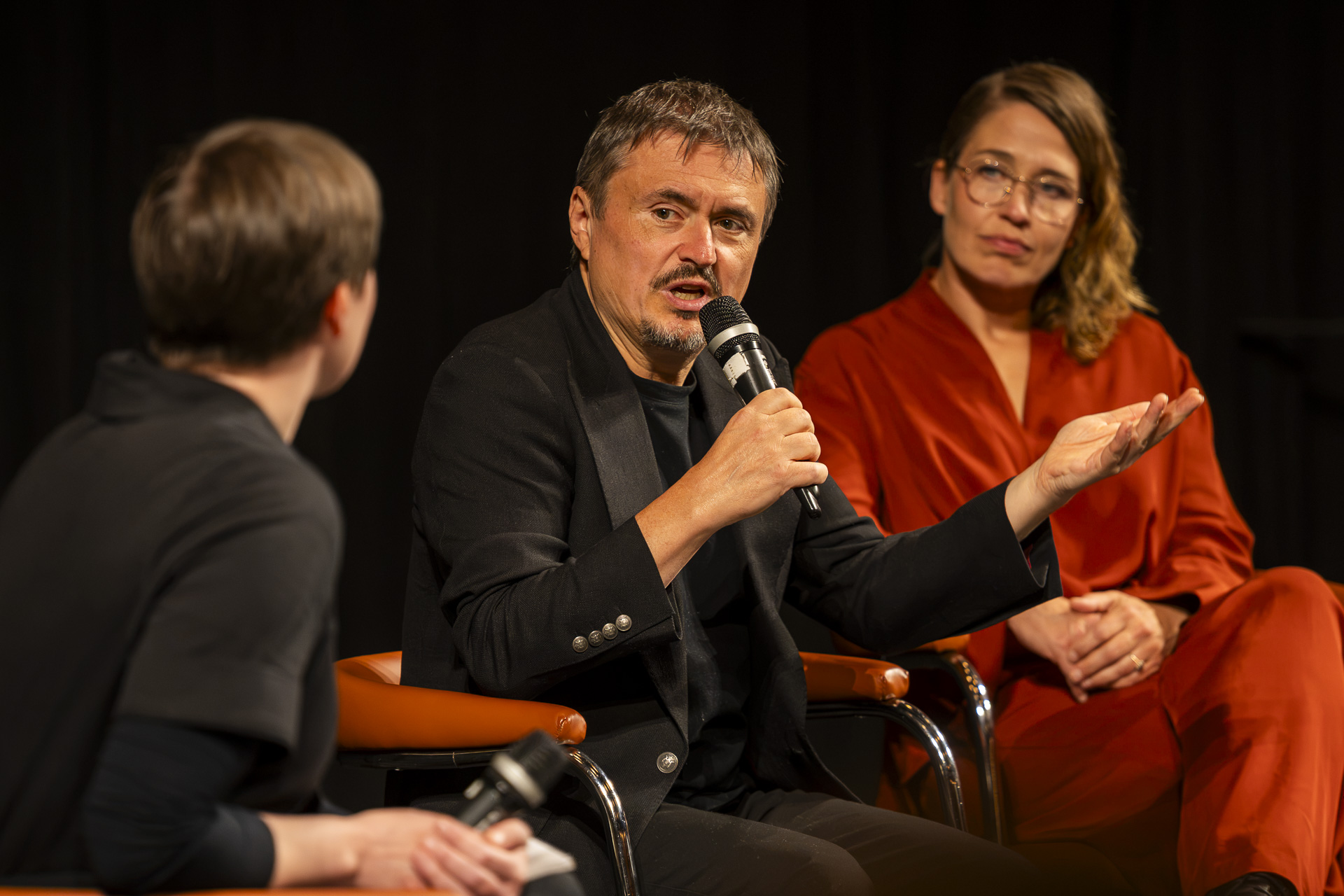
The clock struck 1 PM on Wednesday as the short film screening organised together with Love & Anarchy and Finland’s national public broadcasting company Yle started in Bio Rex Lasipalatsi. All four films from the fresh series titled fml were shown: Gap, Repale, Misstakes Misstakes and Emilia tahtoo bailaa. These short films were aimed at a young audience and, in addition to Yle, their realisation has been supported by AVEK and the Church Media Foundation. There were 89 applications from which these four films were chosen for production. Ideas for films were sought out with the theme “Things that are hard to talk about”.
The audience was made up mostly of young people and media professionals. Actor Anni Iikkanen hosted the event and interviewed each filmmaker after the film screenings. The event finished with a panel discussion covering the opportunities for young people to enter the film and media industries. The conversation included Yle’s documentary and series programmer Mikko Peltonen, film producer Julia Elomäki, screenwriter Ilmari Nera and a multi-skilled industry professional Eme Tähtinen.
The conversation kicked off with the topic of funding. Elomäki encouraged people to grab a phone and call instead of always sending emails, because doing so is rare and shows the passion and enthusiasm of the caller. “If someone decides to call and propose a meeting, it’s hard for me to say no on the phone,” Elomäki noted.
Finnish Gala: Nightborn
“The story comes partly from my experience as a mother,” director Hanna Bergholm said, drawing laughter from the crowd. The Finnish audience had just seen the film Nightborn (Yön lapsi) for the first time at Bio Rex Lasipalatsi. Having made its world premiere in the main competition of the Berlin International Film Festival, the story of a crying monster baby made the audience both laugh and cringe at what they saw on screen.
After the screening, the director shared that the plot remained largely unchanged throughout the writing process. According to screenwriter Ilja Rautsi, the film initially struggled to find its identity, but the pieces fell into place during a single meeting. The story follows a young couple, played by Seidi Haarla and Rupert Grint, who move into the middle of a Finnish forest to raise their first child. The seasons change, and at every turn, the forest becomes more beautiful—yet increasingly terrifying.
The film drew inspiration from Finnish fairy tales, and a mythic atmosphere resonated clearly on screen. Bergholm shared that her parents used to read old Finnish fairy tales to her as a child. “The stories are timeless,” she said, describing the charm of folklore. The distinctive music and soundscape by Eicca Toppinen, known from the band Apocalyptica, put the finishing touches on the hum of the living forest. Bergholm mentioned that she is a huge metal fan and that Apocalyptica was constantly playing in the writing room as the concept took shape. Toppinen told the audience that he selects his projects very carefully: “I have to feel that the project needs something that only I can bring.”
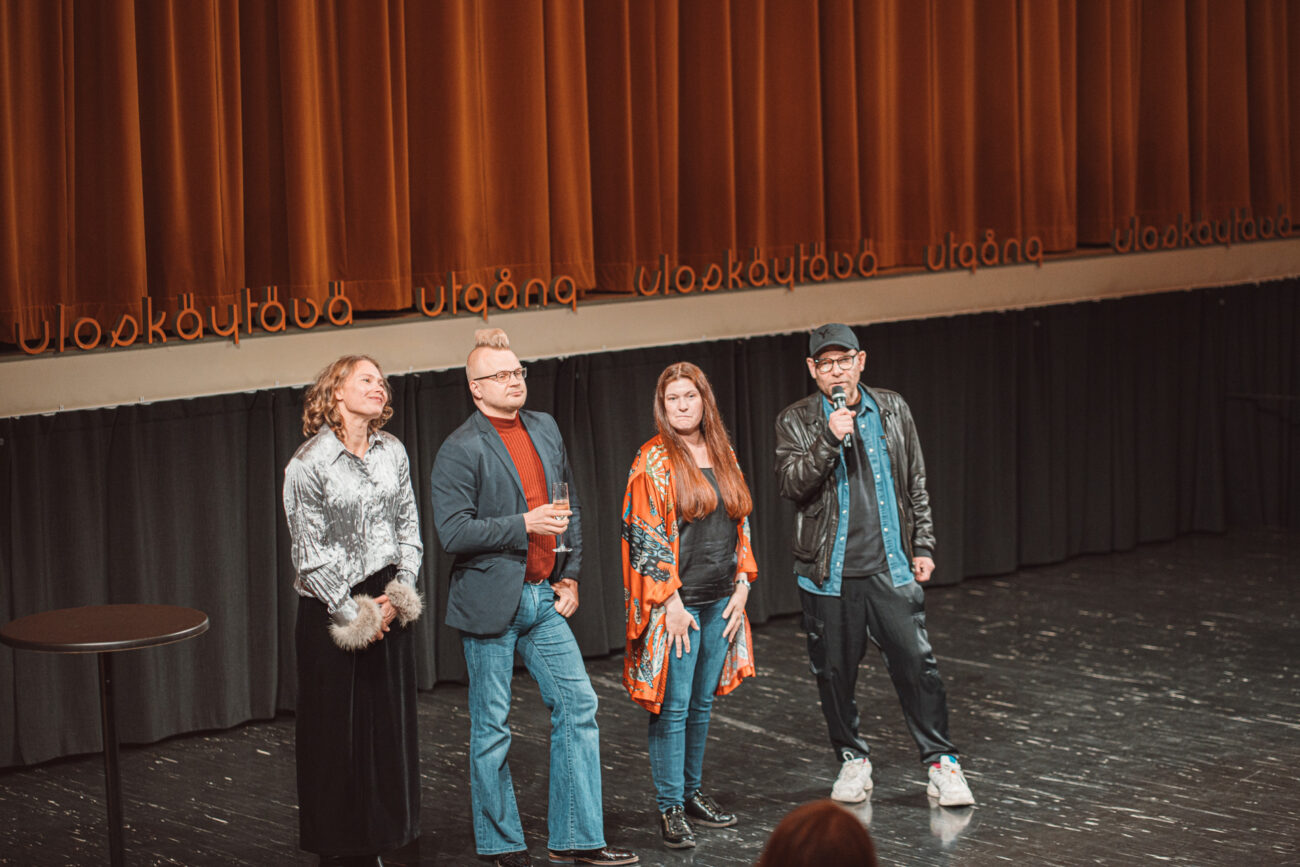
Haarla described the physical aspects and challenges of the role to the audience. According to her, work began alongside a choreographer, Bergholm, and Grint, ensuring that the movement seen in the opening scenes conveyed the intended story. Haarla shared that portraying a mother slowly descending into the depths of her mind was deeply emotional and profound, as a mother’s roots reach all of us in one way or another. Haarla described Grint, known for the Harry Potter films, as professional and surprisingly grounded despite his child-star background. Bergholm also praised Grint’s professional attitude and humility: “You can tell he grew up making movies.”
R&A Talks x Uusi Juttu: Live-Kerma
“This isn’t a talk show, this is Kerma,” journalist Hilla Körkkö set the record straight right at the start, as Uusi Juttu’s culture program Kerma launched its live discussion at Gilda on Friday. During the bold and wide-ranging conversation, Körkkö was joined by journalists Sonja Saarikoski and Olli Seuri. The fast-paced half-hour covered debates on how journalism is portrayed on screen, the challenges brought by new technology, and the current state of journalism and its institutions.
Screened after Live-Kerma, the film Solomamma (2025) prompted the panelists to reflect on the image of journalists and journalism presented in movies. According to Saarikoski, journalists are often stereotyped as “a hero, a villain, or a lightweight,” whose professional life steamrolls over their personal life. Because of this, Solomamma’s main character Edith provides a refreshing portrayal of a journalist who breaks the norms of the heroic archetype. Seuri, on the other hand, praised journalism-centered films where the profession serves as a framework for the story and a lens for exploring its ethical dimensions.
While the portrayal of journalists sparked much discussion, the impact of new technologies like AI on journalism also fueled debate. As information becomes more readily accessible, journalists’ writing and sources are scrutinized in new ways. With the expansion of communication platforms, journalism faces a novel need to defend its existence through ethical rules. As Körkkö pondered whether AI will affect these shared rules, Saarikoski and Seuri delved into the risks of outsourcing human thought.
Finnish Film Affair
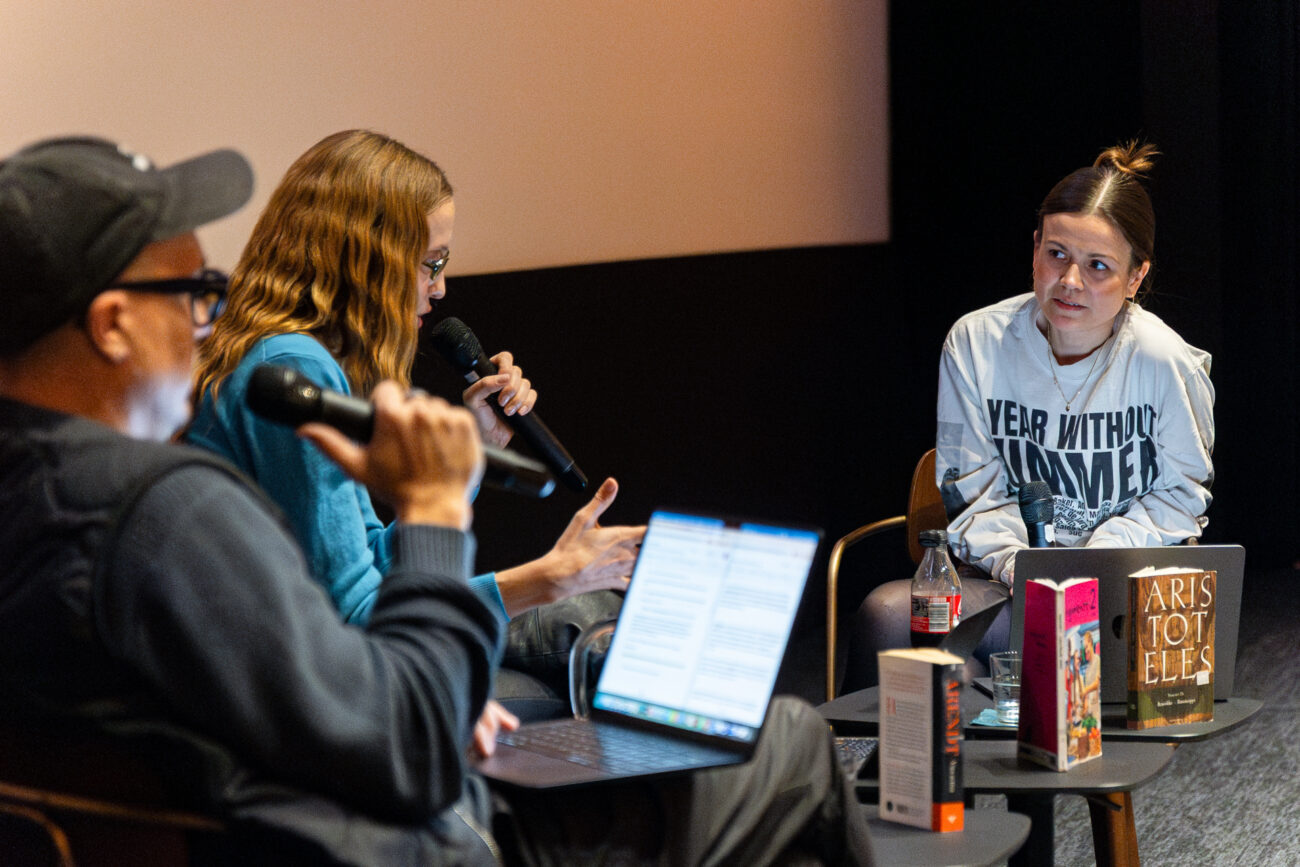
On Wednesday, the Finnish Film Affair, R&A’s industry event running through Friday, got underway, drawing large numbers of film industry professionals to the Lasipalatsikortteli area. The programme ranged from SpeedACTING, which brings actors and filmmakers together, to a wide variety of panel discussions. Over the three days, the panellists discussed topics including the franchise phenomenon and collaborative writing.
On Wednesday, filmmakers Danny Cannon (CSI and Gotham) and Jodi Hildebrand (Marvel, Condé Nast), moderated by Marta Balaga, opened up to the audience about how to keep audiences interested in familiar characters time and again. Cannon had an additional reason for being in Helsinki besides FFA: he is the lead director and producer of the upcoming television series Uskollinen lukija, based on Max Seeck’s novel. “Perhaps this series will also expand into a franchise,” Hildebrand remarked.
The final day of FFA was just as lively in terms of subject matter as the first. The panellists at “The Market is the Monster” revealed fascinating details about the profit-driven forces behind the film market. Producer Todd Brown opened the panel by painting a bleak picture of the future of film financing. Budgets are becoming tighter, funding is becoming scarcer, and power is increasingly concentrated in the hands of Big Tech companies.
According to producer Camille Gatin, the increasingly expensive production environment is forcing filmmakers to get creative in order to stay within budget. She and her crew went searching in the British countryside for a filming location for a zombie movie. Constructing abandoned schools, hospitals and residential buildings as sets would have cost a fortune; instead, a deserted small town provided the perfect setting for the apocalypse for next to nothing.
Hanna Bergholm, known as the director of Hatching (2022), added to Gatin’s point with experiences of her own. Bergholm explained that financing had also influenced the cast of characters in her latest film, Nightborn (2026), which was also screened at R&A. Although the decision regarding the nationality of the couple at the centre of the film was primarily driven by the story, the father’s British nationality was also partly motivated by the possibility of attracting international financiers.
Cristian Mungiu Q&A + INterstellar
After the screening of the Nordic Gems Gala film Fjord the audience got to enjoy a Q&A session with the film’s director Cristian Mungiu, costume designer Kirsi Gum and co-producer Jussi Rantamäki. Mungiu shared the philosophy behind his Palme d’Or-winning film, explaining that he aimed to approach his story from a politically neutral perspective. “You shouldn’t make films just for your own bubble,” he explained. He justified his static filming style as an effort to keep the filmmakers’ presence as invisible as possible. Kirsi Gum described her close collaboration with Mungiu on costume design and revealed that she had created three different scarves for Renate Reinsve’s character.
At the end of the session, there was time for two audience questions, both directed at Mungiu. The first concerned the casting and direction of child actors. “The key to directing children is giving simple instructions,” he answered. The second question sought advice for aspiring filmmakers. The experienced director advised ensuring that a story personally interesting to them would also interest others and remembering that, in the end, budget size doesn’t matter.
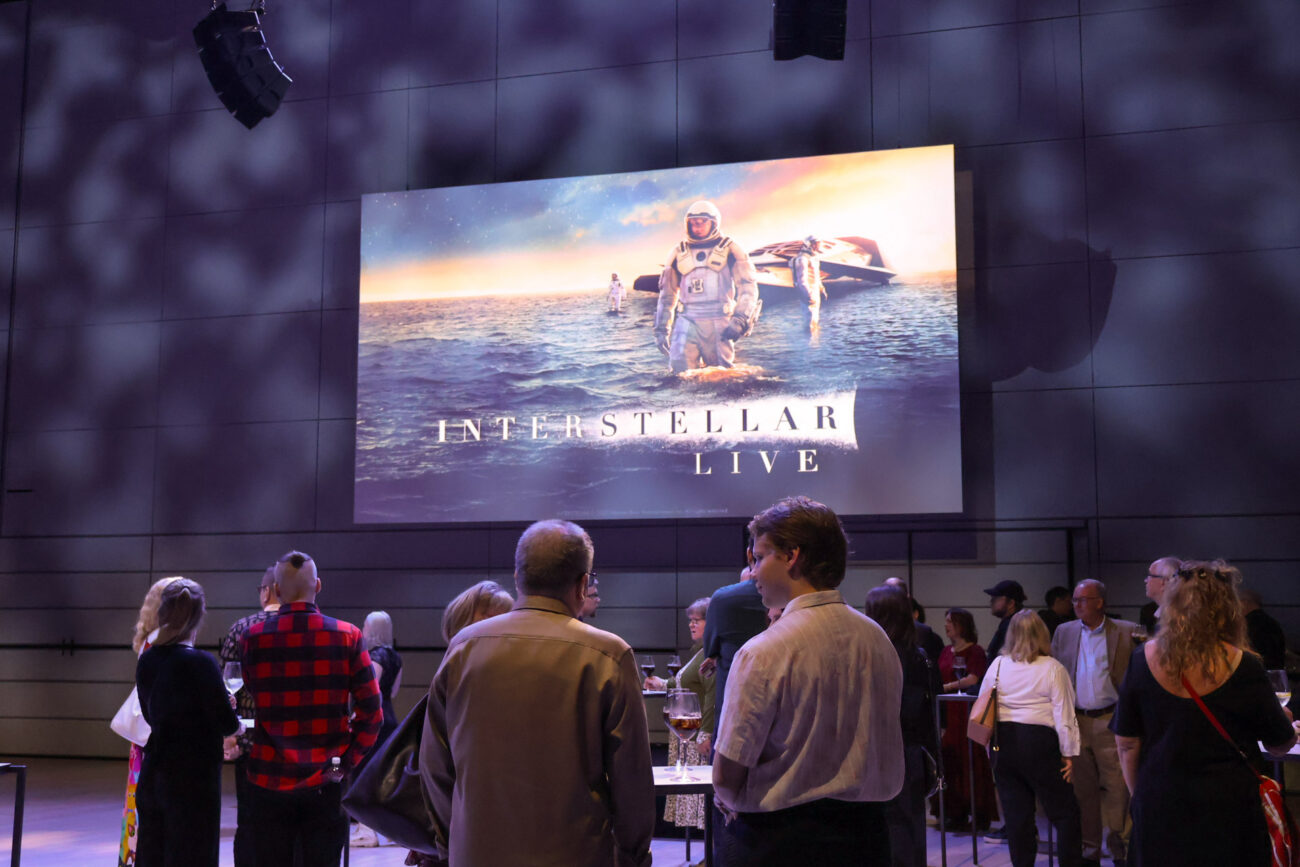
At the same time Helsinki Musiikkitalo was filled with the magic of music and film during the Interstellar film concert. The sold-out hall enjoyed Christopher Nolan’s sci-fi spectacle, which is on the verge of becoming a classic, while the Vantaa Orchestra performed the film’s score. Supporting the orchestra on the organ was Roger Sayer, who also played on the original soundtrack. As the powerful experience drew to a close, the hall’s soundscape shifted from Hans Zimmer’s beautiful melodies to the sniffles of moved audience members.
Closing Gala: Minotaur
As the festival nears its end, the queue stretching from the gala hall door all the way down the stairs to the lobby has become a familiar sight at Lasipalatsi’s Bio Rex. From the over 400-seat auditorium, the audience could watch behind the scenes footage of the festival as they settled into their seats — and soon saw the team reflected on the screen standing on the stage before them.
Pauliina Ståhlberg, the Executive Director of Love & Anarchy, introduced the behind-the-scenes crew with pride audible from her voice. Gratitude was extended not only to the festival’s core team but also to the group of volunteers consisting of over 200 people. Ståhlberg’s final thanks were directed to the audience: “Without you, we are nothing,” echoed through the speakers with such a weight that no one could doubt the sincerity of her words.
And as has been the case with opening remarks before screenings, grand applauses followed the final speech as well.