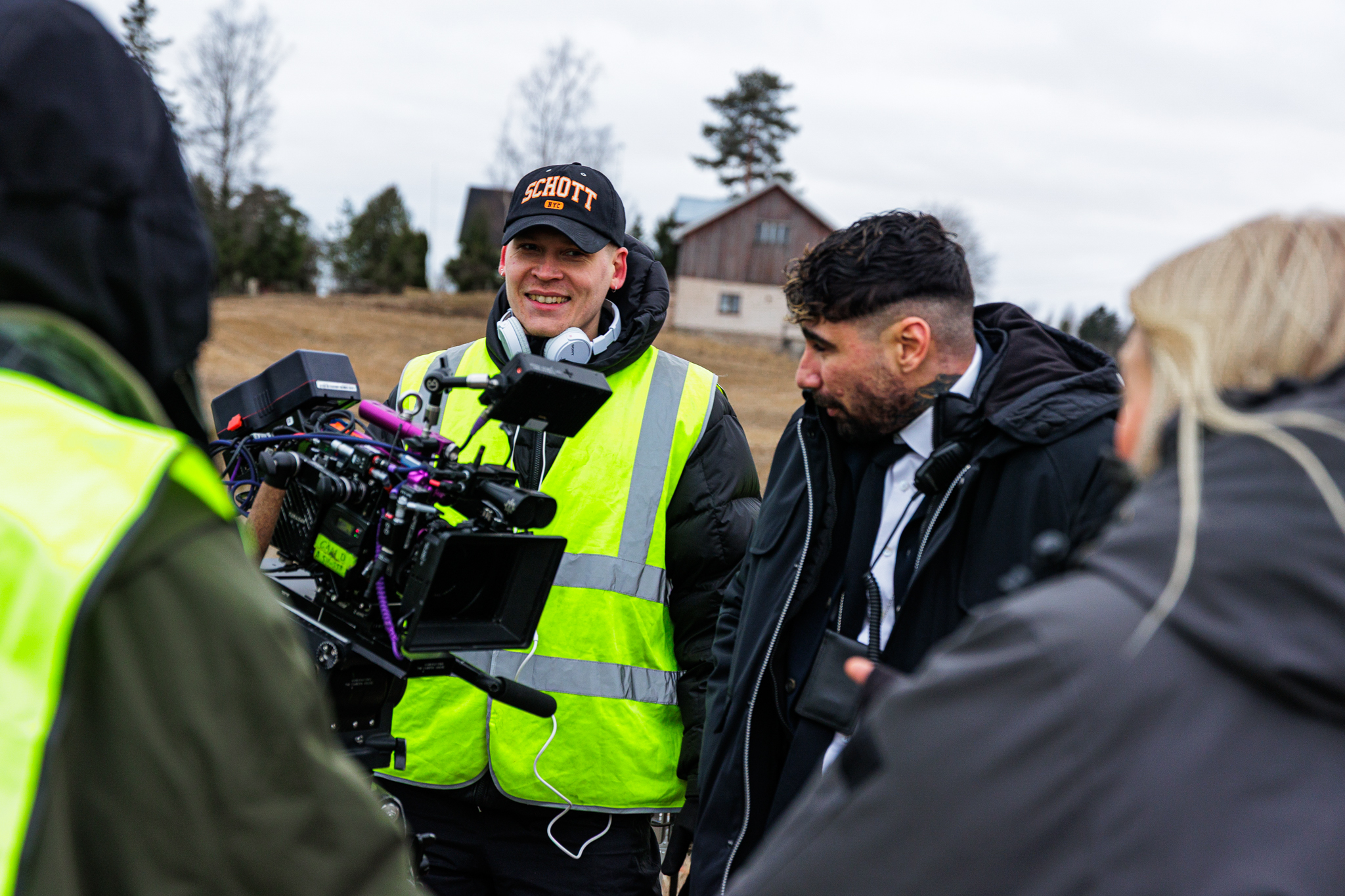
Director Kimi Issakainen turned the fear of missing out into a festival trailer blending thriller, horror, crime and absurdist comedy.
What do a plummeting airplane, squabbling superheroes and a screaming Marshal Mannerheim have in common?
Each of these have in some way made an appearance in a trailer for the Love & Anarchy film festival. There is no outline for what the result should look like, and each trailer is a reflection of its maker.
Over the years the festival trailer has evolved into a small phenomenon of its own, feverishly anticipated by film audiences and industry professionals alike. This year’s project is piloted by jack-of-all-trades of the visual arts, writer-director Kimi Issakainen, for whom directing the festival trailer has been a longtime dream.
Many friends and colleagues in Issakainen’s inner circle have been honoured with the task. Thanks to their encouragement, Issakainen finally decided to contact the festival organisation himself. He came armed with not just an idea, but a finished script, honed together with producer Salla Ryynänen.
“There was a certain emotional state I wanted to base the world on. I wanted it to be a little weird. The trailer should provoke a feeling you can’t explain, you just feel it somewhere. Still, it should have a clear hook, so it’s not just a disjointed art attack,” Issakainen describes his process.
The emotional state in question was a familiar modern-day phenomenon: FOMO, the fear of missing out. What happens, if you can’t make it to the film festival, despite all your planning? What if everyone else goes, sees, and experiences everything, and you alone are left out?
In Issakainen’s interpretation, this feeling is not just hurt, but anxiety, stress, and finally, guilt.
“If the idea is, that if you don’t go to the festival, you get terrible FOMO, what is that feeling? It’s anxiety. The best genres for depicting it are horror and psychological thriller.”
The trailer, Jäänyt (Left Behind), opens at a gas station, although the car is being filled with electricity, not gasoline – in accordance with Love & Anarchy values, Issakainen points out.
Helmi, portrayed by Laura Birn, knocks out the person charging their car and tries to make a getaway with it. But damn it, the car is locked!
Arvo, played by Martti Suosalo, arrives on the scene, two dogs in tow.
From this point on, reality begins to fracture.
The mood alternates between thriller, horror, crime and absurdist comedy. Issakainen describes the trailer as a genre blend, intended to stretch boundaries. The contrast between suspense and humour is not accidental; the two sentiments intensify each other.
Sources of inspiration include David Lynch’s Twin Peaks, Joel Coen’s Fargo and the works of Alfred Hitchcock. According to Issakainen, the music is a mixture of classical, Max Richter and something Tarantinoesque.
Although horror has a strong presence in the trailer, Issakainen confesses to not being a particular fan of the genre.
“I wanted a contrast between the themes, and horror makes that possible,” he says.
The strangeness is also intentional. Not everything has to make sense.
Issakainen does not want to explain everything about the trailer, hoping to leave some room for viewer interpretation. He does, however, reveal, that the other characters are a kind of mirror image for Helmi.
Suosalo’s Arvo represents guilt. He hounds Helmi, reminding her that she should be somewhere else. The dogs are fear itself. Karim Rapatti as the policeman represents official authority and the desire to find out what really happened.
“They’re all emotions experienced by the protagonist that she struggles with,” Issakainen sums up.
This is the reason the structure of the trailer is not entirely chronological. The events are not being observed from an outside perspective, but as they are organised inside Helmi’s head.
“Our director of photography had trouble accepting the breaking of chronological order. But that’s the idea, we’re inside this woman’s head. Don’t worry about how we came from the dark and now the sun is over here or there. That’s not what matters,” Issakainen says.
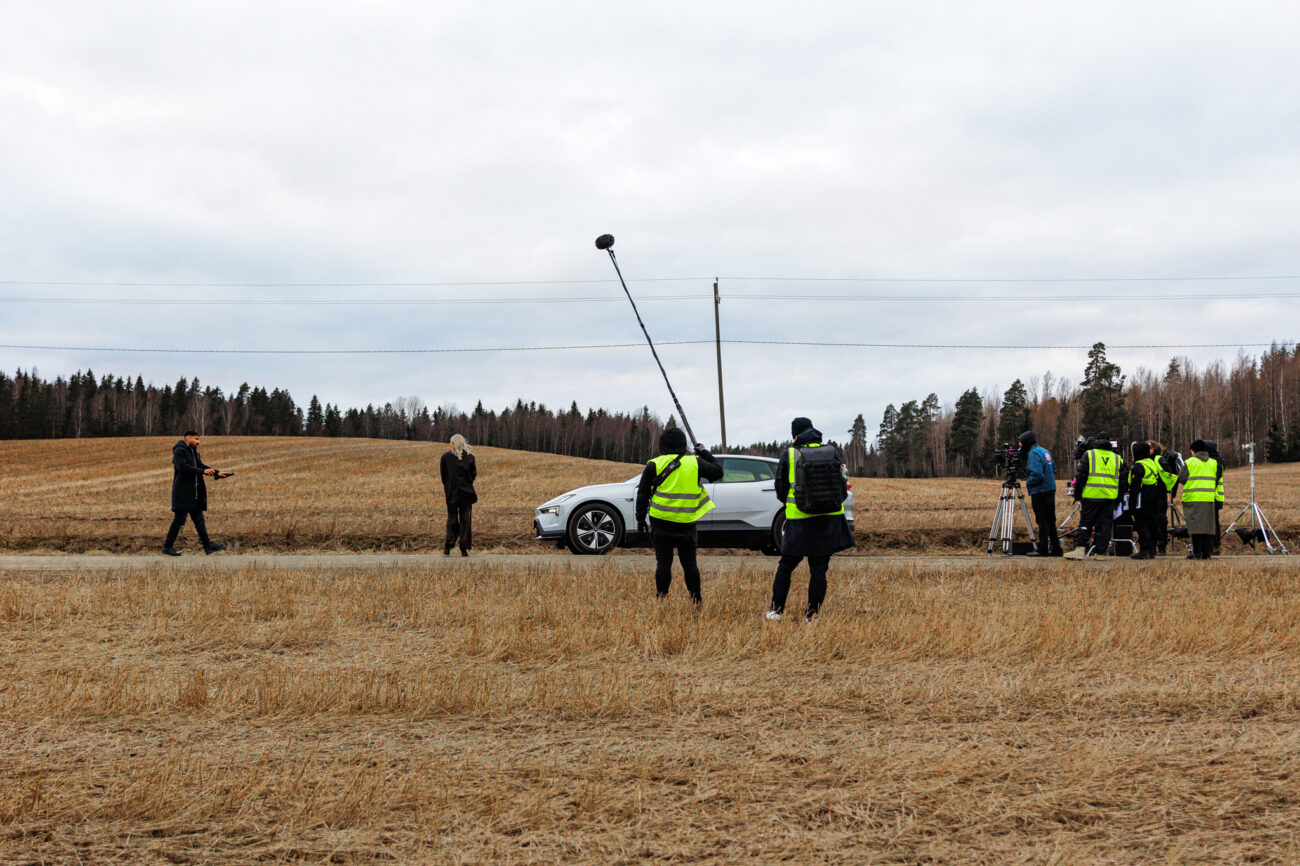
One of the greatest joys of the project for Issakainen was working with big-name actors. Alongside Birn, Suosalo and Rapatti, Aamu Milonoff stars as a teenage version of Helmi.
But according to Issakainen, the actors didn’t just realise a pre-made script. They brought their own colour to the characters, and some scenes were changed during filming.
For example, Milonoff ended up with more screentime. Made up to look like a young Helmi, and dressed in a Pierrot-like costume, the end result resembles a doll, intensifying the horror vibe.
“I was sitting behind the monitor terrified,” Issakainen describes Milonoff’s performance.
Issakainen was particularly delighted that the actors could be given space to be creative even in front of the camera. For example, in the scene Birn and Rapatti share, both had a chance to improvise.
“Working with professionals like that, it takes them seconds to immerse themselves in the role. They brought such beautiful nuance to the roles, that we just had to give them more screentime”, says Issakainen.
It was because of these performances that the trailer finally grew larger than originally planned.
The project was Issakainen’s first real contact with the world of film, which made it special.
His background is in visual arts: after vocational school, Issakainen started his career as a graphic designer for an advertisement agency and later went on to become an art director and creative director.
Issakanen finds the combination of different types of creative work the most fascinating aspect of film.
“Visual aspects, emotions, sound and story all come together”, he says.
For the Love & Anarchy trailer, he got to build a world almost from scratch. Issakainen designed the environment, costumes, soundscapes and visuals to his wishes together with his crew.
Issakainen’s background in fashion is also visible in the final product. Birn’s costume is entirely the work of Rolf Ekroth, and characters are also seen in designs by Sofia Ilmonen. The outfits were not meant to be traditional costumes, but part of the characters’ world.
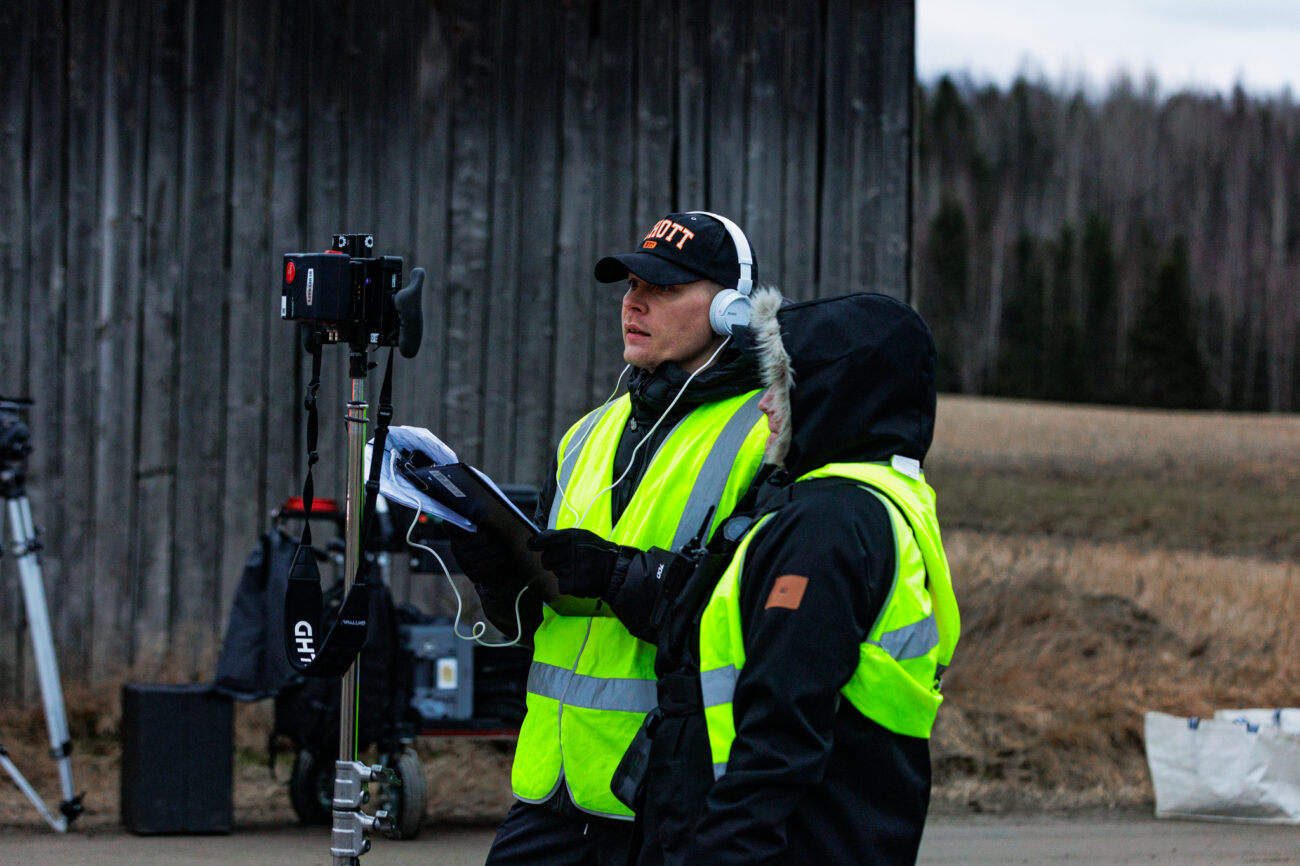
The visually ambitious piece had to be realised under serious time constraints.
Jäänyt was filmed in Pornainen this spring, over one 12-hour day of shooting. Some of the crew thought the schedule near impossible, says Issakainen.
“Our DOP kept saying we will never manage. I said we’ll just go and get it done.”
And so they did.
The original goal was just to make a festival trailer, Issakainen says. In the end there was so much footage, and the actors’ performances were so great, that it was impossible to leave all of it on the cutting room floor. And so, a longer version of the trailer, around four-five minutes, was made in addition to the official one. A short film of its own kind.
“We’d written the script to be short, but soon realised that the performances worked so well with longer shots, that we didn’t want to completely leave out these beautiful scenes. We thought it was essentially the same story, just longer. We think it’s also more rewarding for the viewer”, says Issakainen.
The longer version gives the actors, and Ilari Heinilä’s soundscapes, more room. From the get-go the objective was to make the viewer feel like they’re watching a film, not an ad.
These cinematic aspirations can also be heard on the soundtrack. A French-language song titled Ce n’était pas ta faute, performed by Jasmine Lefrancois, was composed for the ending. Issakainen wrote the lyrics in Finnish, after which they were translated into French.
The sentiment, repeated in the chorus, is “it’s not your fault”. Accordign to Issakainen, the purpose of the song is first and foremost to give solace.
The same consolation can also be found in the final words of the trailer as spoken by Suosalo’s character.
“You can still choose.”
The phrase had been carried along from the earliest versions of the script, says Issakainen. It functions as the hook of the trailer, while also expanding the story beyond the Love & Anarchy film festival.
“We wanted to hook the viewer in as much as possible. It’s a final note to stir something in you. In this case it was about Love & Anarchy, but it also functions as a universal call to action. Stop wallowing in guilt, just make a change.” says Issakainen.
Helmi can get caught in her fear, guilt, or the feeling that she’s missed out on something.
Or she can make a different choice. And so can the viewer.
You can still go to the festival.
Venla Rouhiainen