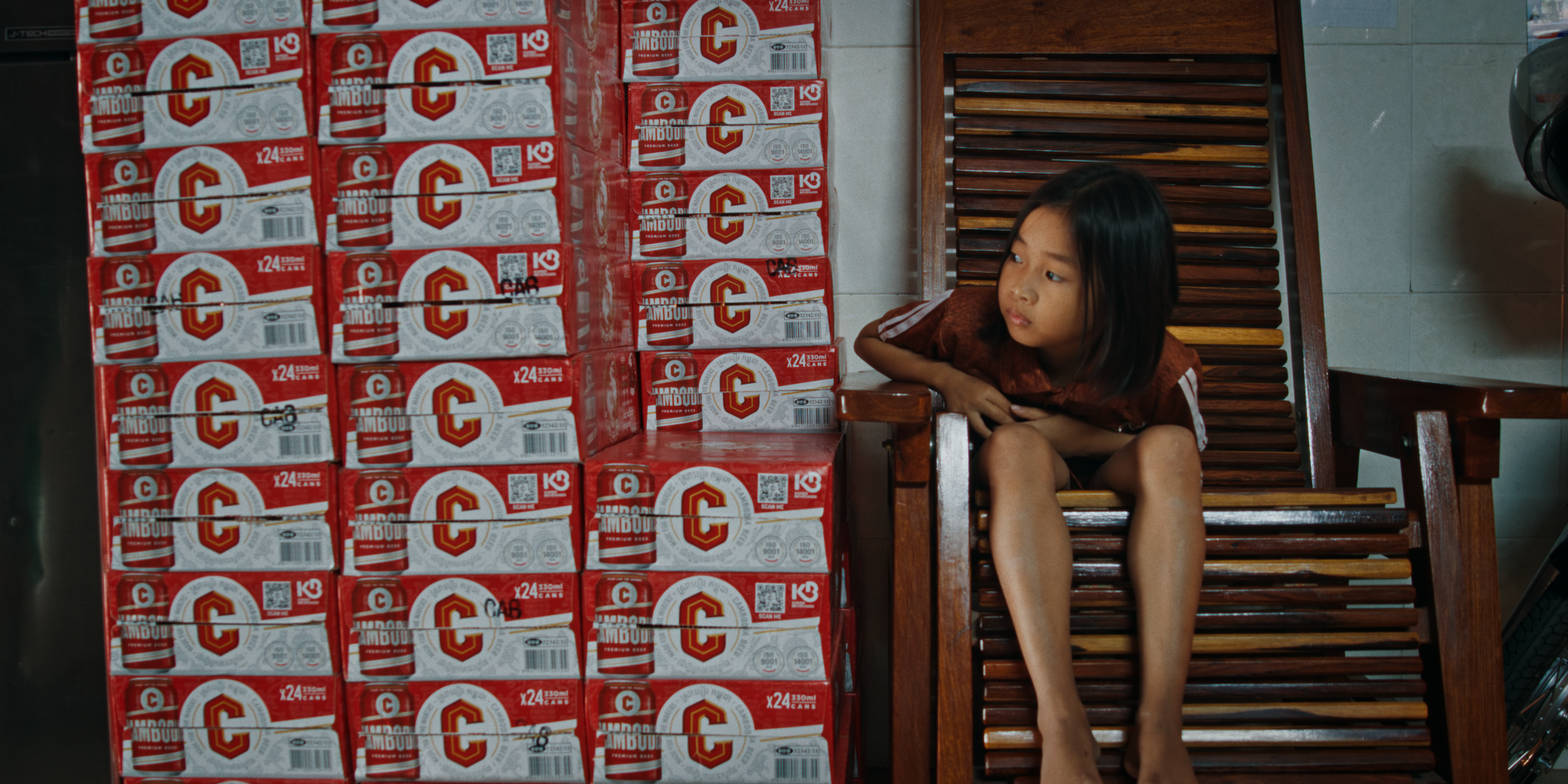
A sort of premonition of this essay was an observation left behind by Alfonso Cuarón’s film, Roma (2018). The observation is about the fact, that the vast majority of stories told through the history of film become possible through a phenomenon known as class oppression. In films, protagonists and their lives are being supported by a diverse working class. This multitude, working from the film’s shadows, serves the protagonists food, makes it possible for them to travel overseas, cleans up their dwellings, and nurses them back to health after fight scenes that are made to exhilarate the viewer. The story of Roma seemed to be located in this shadow zone: our middle-class-centric and Eurocentric depiction and viewing conventions were tested, as “significant events” took place beyond the action horizon of protagonist Cleo, yet the film’s point of view was centred around her. Cuarón’s Roma was not in the programme of Love & Anarchy, but possibly inspired by just this particular film’s viewpoint, I begun to look for films that bring forward the working class’s perspective. In hindsight I will say, that in regards of this theme Love & Anarchy has, in the past few years, been a most abundant film festival. Into this continuum, the festival of 2026 will once again be presenting quite the broad selection of films.
“A dolphin’s smile is nature’s greatest deception. It creates the illusion that they’re always happy.”
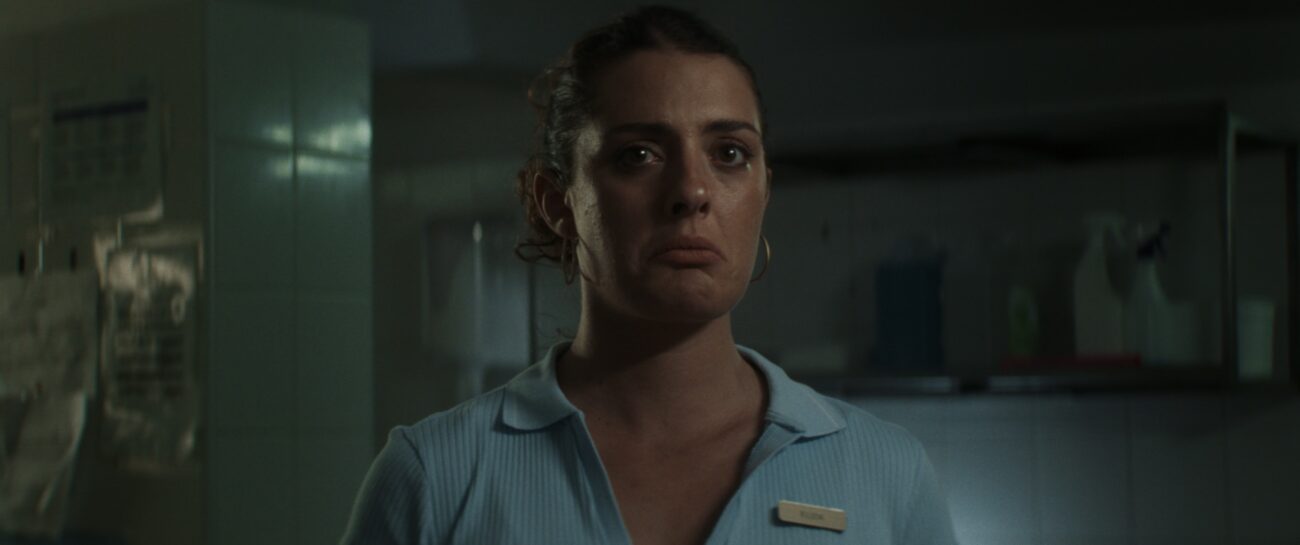
The quote by former dolphin trainer and present animal rights activist Ric O’Barry, which was widely spread through the documentary The Cove (2009), is one of the starting points of Alexandra Matheou’s short film. Presented this year at Love & Anarchy, Free Eliza (Notes on an Anatomical Imperfection) (2026) is a depiction of holiday centre worker Eliza – and also her coping strategies as a customer service person not being able to smile due to an anatomical deviance. The film’s genre is a blend of black comedy and realism that brings to mind Yorgos Lanthimos’ comedy-dramas, quite unique in their atmosphere.
As someone who detests the idea of holidaying and who’s also worked in customer service, I very strongly remember the euphoria that comes from knowing, that us in customer service only pretend or act to be sorry for the complaining customers, and know the service we’re providing to be more or less staged. Free Eliza captures this feeling in a most tangible way.
The very same thematics of façade building open up even more clearly in Lila Avilés’ film, The Chambermaid (2018), which was presented at the 2023 festival of Love & Anarchy. The Chambermaid, portraying the workweek of Eve who works as a room attendant in a hotel, is a particularly beautiful film in all its plainness. The film’s appeal is based on the pleasure of working as well as on the immersion created by depiction of meticulous work. It’s as if the viewer was working as Eve’s partner, as she confidently transforms the rooms, messed up by customers, into seemingly untouched props. Via elevator, Eve moves to the floors we can’t get to as customers, and heads behind the set with her cleaning trolly, into the depths of mountains of detergent and sheets. In the background the washing machines are humming, and the spaces’ acoustics offer a sharp contrast to what we just witnessed in the softly acoustic hotel rooms. The hotel and the film are suddenly very much alike with their sets.
The narrative tension of The Chambermaid is built upon the question of how much time is Eve willing to sacrifice for a job she’s taken granted for doing, and which forces her far away from her child living at his grandparents’ house. Eve strives for a promotion, so she’d get to work at the hotel’s 42nd floor, but the dream of a better life that materializes as a red dress a customer has forgotten into a hotel room, only manages to sustain hope for a limited amount of time.
A worker builds and holds up the façade as long as a possibility for a life held up by the façade stays open.
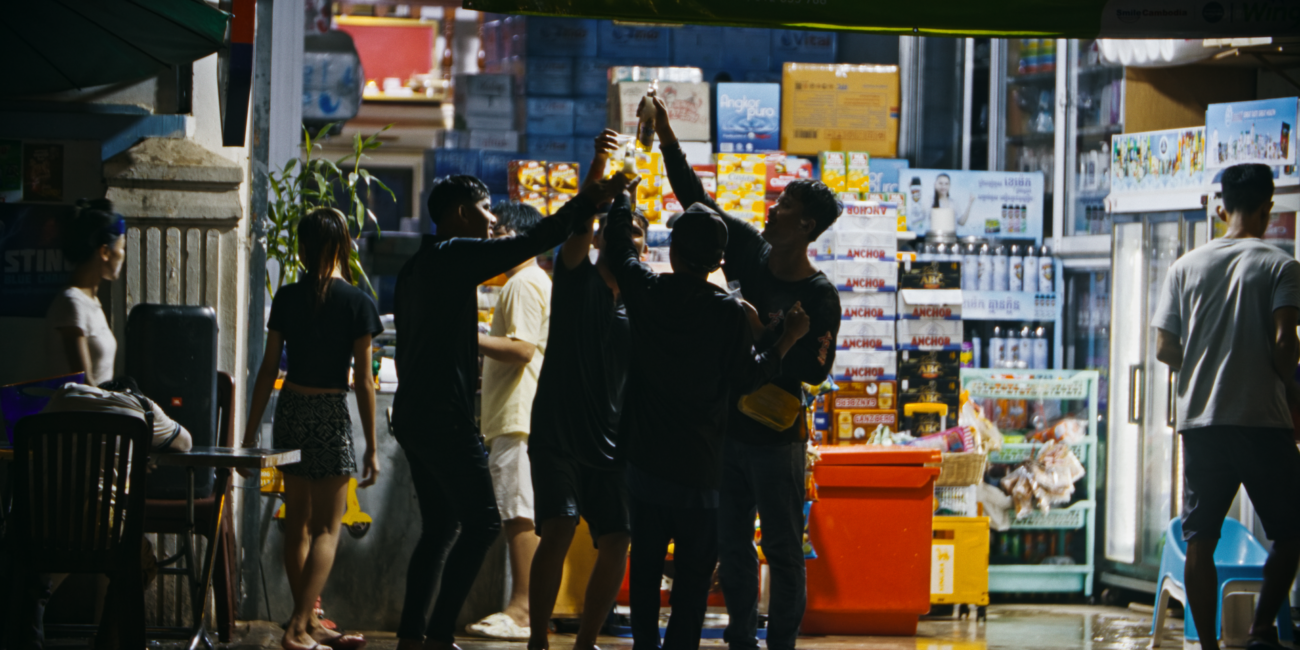
Neon-light-mimicking glow of led-lights and a synthwave-type of a soundscape colour the cityscape in South-East Asia. Instead of streetlights, Cambodian streets are lit up with beer adverts. Cyberpunk classic Blade Runner’s (1982) audiovisual toolbox is strongly present in this film that’s been selected for this year’s festival of Love & Anarchy: Danish director Laurits Nansen’s documentary Cambodian Beer Dreams (2026), which portrays beer capitalism and its consequences caused by international corporations and local corruption. The film builds its visual attractiveness on melancholy, dream worlds, and tragedies left in the dark. However, this isn’t the film’s weakness, but I interpret it to be a conscious use for effect that also imitates the familiar narratives used in marketing beer. The idea of beer is based on a dream of something better – or to quote community activist Kim Eng, who becomes the film’s protagonist: “Dreams are like being drunk.”
In the history of Cambodia, the second half of the 20th century was permeated with violence. The country was, for example, subjected to extensive bombings by the United States during the Vietnam War, and over one million Cambodians met their end in a genocide executed by the government in the 1970s. Even though the document doesn’t get immersed into these events or the effects that the trauma, caused by violence, has had on the country’s alcohol culture, this historical context is one of the film’s starting points. In the past twenty years the use of alcohol has quintupled, but the country’s administration has – according to the film’s viewpoint, intentionally – restrained from preparing any sort of alcohol legislation. Cambodia has thus been turned into a proving ground for beer capitalism, where international beer giants and local rival companies can operate free from any regulations.
At a family beer festival, the beer-lottery-winning consumers are rewarded, and music performances are seen. There’s a VIP-area for social media influencers and “beer girls”, who keep company for the guests. The darkling tropic is lit up with billboards and fireworks. For cooling, there are water jets as well as water pistols, which have been distributed for the attendees, and with which even adults play with. The ultimate strength of the documentary is, that by showcasing it by its utmost flagrancy, the film manages to concretise the full scale and complexity of beer capitalism. Unlike deeply rooted cultural customs seem to suggest, beer and the working class aren’t on the same side against the oppressor, but beer is the oppression’s instrument: a miracle cure and a miracle poison, that does ease symptoms, but does not cure, nor kill.
The film’s working-class point of view is left behind the civic activism that opposes beer capitalism. It is clear, however, that the reasons for increased alcohol consumption are not results of successful brand strategies, advertisement or just easing availability – beer consumption is a consequence of the limitations in the possibilities of everyday life. Most probably, the public enjoying the beer festival or the customer buying beer on credit from the local liquor store have worked such amounts in the past year, that our competitiveness pact would turn pale with shame, and with such terms of employment they would in Finnish context mean human trafficking. The labourers are fuelled with a dream of something better, a dream of which only crumbs are made available at beer lotteries, where you can win yourself a car from every beer can, and thus also an entry to the other side of the beer adverts’ façade.
There is no visual contact to the other side of the façade in the documentary that was seen at Love & Anarchy in 2024, called Youth: Spring (Wang Bing, 2023). The documentary is the first part of a trilogy, of which two latter parts are Youth: Hard Times (2024) and Youth: Homecoming (2024). The trilogy’s combined length is almost ten hours, during which we follow China’s textile industry workers’ lives in the city of Zhili in Zhejiang province from 2014 to 2019. The entirety forms one of the most impressive depictions I’ve ever seen of modern capitalism, but also of modern China.
In this trilogy Wang, stretching documentaries’ lengths to the limit, portrays for hours the labour in workshops specialising in children’s clothing. The labour consists mainly of quick stitching repetitions on a sequence of the same clothing – and, as the series of clothes are finished, culminates in the workshop’s owner’s and their sewers’, working as subcontractors, lengthy sales negotiations concerning the finished clothing. The trilogy repeats the workers’ identically recurring days for what feels like an endless number of times. At times the camera moves into the workers’ quarters that are located in the same buildings as the workshops, where the workers, mainly under 20 years old, maintain their relationships, sleep, eat, spend their time, and fall in love. The sequence of unendingly high apartment blocks spreads so wide from the balcony, that the camera doesn’t capture anything else but raddled concrete and constantly low-hanging grey skies. For the first two hours the viewer faces the near impossible task to try to understand, why these young people content themselves with such incomprehensible working conditions, and other than sleeping, what does their free time consist of between stints that extend to 20 hours.
However, slowly the return to the quickly reeling sewing machines starts to fascinate. Controlled hand movements, changes in course, inversions, and the skilful extension of a single stich through practically a whole series of clothing captures the mind – and I can feel the same aesthetic pleasure I believe the worker does as well. In this breeding facility of polyester clothing, the worker and their sewing machine are an integrated, biomechanical unit: the human animal adapts to monotone repetitions and lets time do its job: hundreds, and again hundreds of children’s overalls are completed – and the viewer, too, feels their concentration running low.
The ultimate strength of Wang’s trilogy is that it manages to, through the feeling of endlessness, explain the viewer something essential about capitalism based on supply chains, and about living as a link in that very same chain. Private entrepreneurs, working in textile workshops, buy a workstation and needed fabrics and materials that are manufactured somewhere else, from the workshop’s owner. Then, with swift movements and the help of their sewing machine, the worker transforms these components into clothes ordered by the workshop – that are, after tough negotiations, sold to the workshop’s owner with a price that the owner knows to be profitable as they sell the clothes onwards to wholesalers and distributors. In the process, the worker maintains their seeming autonomy, and so does the workshop’s owner. As seemingly autonomic choices lead into supply chains, capitalistic production where every participant feels as though they benefit from the system one way or another, is formed.
The “translation” and the supply chain-ification, that Anna Lowenhaupt Tsing describes in The Mushroom at the End of the World (2015) resonate strongly with the anthropological material Wang’s Youth-trilogy depicts. To hold on to the feeling of autonomy, the clothing workshops’ workers gather up savings, send money “home” to their parents living in the provinces, and finally, around the New Year’s celebrations, they get off. The home, that’s hiding behind endless mountain roads and where the workers spend only a few weeks every year, is like a return to the beginning of the last century. However, the money saved up from the clothing workshops makes it possible for whole families to survive in the remote countryside – it also enables the New Year celebrations, weddings and funerals, where the labour is exchanged for a feast, beer, and fireworks that chase away evil spirits both from their hectares of field and uncertain future.
I’m suddenly aware that I’m pondering the delusionality of modern concept of time. So called “progress” is not linear – but more spatial: the resources that “progress” demands are moved from another place to the centre, and there onwards to the wealthier social class. Elsewhere life goes on like it was 200 years ago: only wooden benches have been replaced with plastic ones, perhaps without no one noticing. And meanwhile, in the name of capitalism, even the countries that have reached “the progress”, are being converted back to resemble the intolerable class oppression of the 19th century. The past and the future bite each other’s tails: dystopia wasn’t overrun by progress, for it exists here and now – but also as a constant possibility in the seemingly endless future.
We move along the supply chains closer to their final point, towards Singapore’s middle class in Anthony Chen’s touching family drama We Are All Strangers (2026), which has its Finnish premiere at the Love & Anarchy festival. The film follows two, already once split, families that reconstitute into a hybrid family of proletarian and bourgeois backgrounds, and which includes also a bartender from a Malaysian background, Bee Hwa, who’s been left without Singaporean citizenship. The film is an episodic chain of events, in which the most everyday matters are successfully built into an emotionally credible series of twists. Chen is perhaps consciously going for Edward Yang’s or Hirokazu Kore-eda’s stylized and slow family dramas, from which especially the former’s 1 + 2 (2000) is, in all its plainness, one of the most touching family portrayals amid those, that are particularly based on film’s long duration.
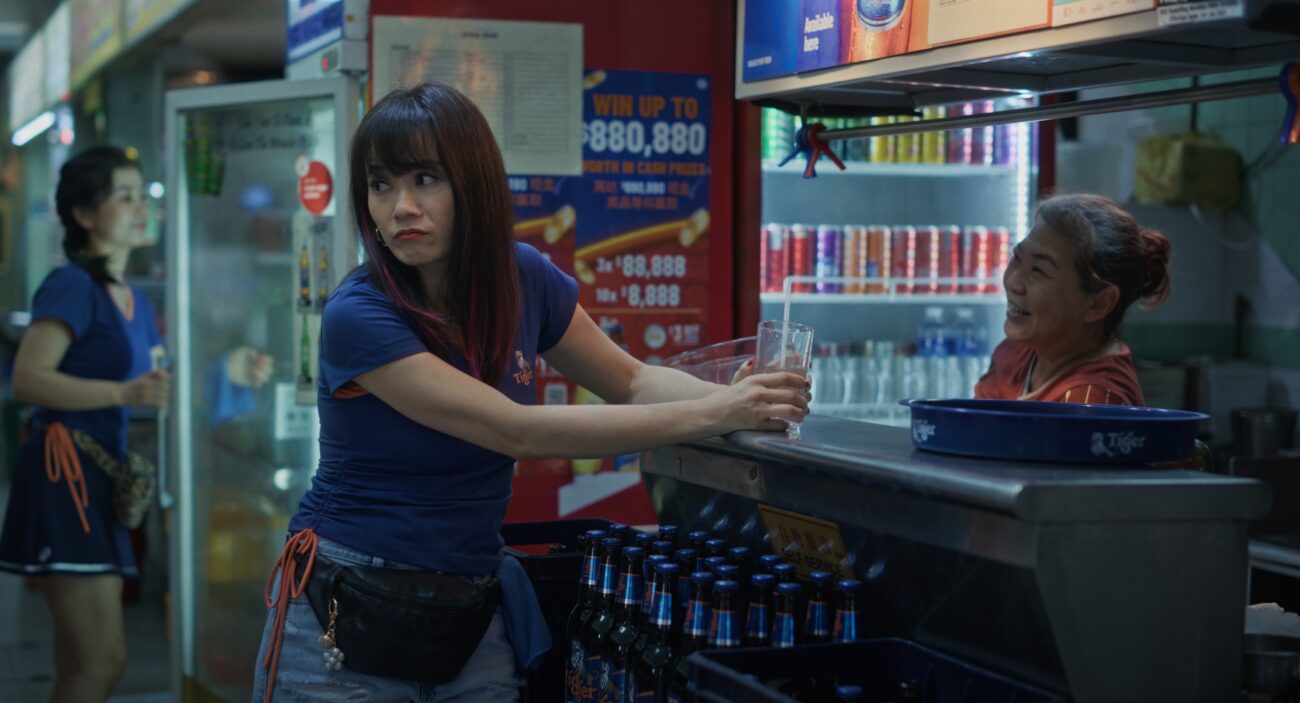
To my delight, labour becomes one of the film’s main focuses. The protagonists must work to survive, and through this labour also the characters’ storylines take shape. However, the labour in the film is the labour of a bourgeois society, and its depiction is disturbed by the idea of its enchantment and magic, which is so often seen in film. In film, labour is action, that can easily get you money while music is playing in the background, as long as the actor can play work in the film a few minutes at a time. From the perspective of supply chains, I’m left wondering, how the supply chains depicted in the film are without origin. In We Are All Strangers, the supply chains can only reach so close to their source as is generally possible in a bourgeois society – they can reach restaurant workers and food couriers, but the food’s origin remains a mystery to the viewer. This feature well illustrates the fact, that the entirety of supply chains is something we don’t experience in a bourgeois society – something in order to understand, one must spend hours watching Wang Bing’s documentaries, for example. And the same goes the other way around: from the starting point of these chains the final points are practically completely unknown, even fantastical worlds, that only exist via news outlets.
The observation concerning future production, that Roland Barthes makes in his collection of essays called Mythologies (1957), about object’s ability to hide its origins and production process holds true. Just like the food from food couriers’ rectangular rucksacks, so are clothes experientially from the Internet as far as we don’t understand the origin of either of these commodities. Meanwhile robot cars and AI pop up out of nowhere, because we’re not familiar with the technological history of automatic driving or machine learning. Besides by Barthes, the feel of the future is explained by the arch-Marxist concept of “alienation”: future comes into being as we step into the world every day as it were the first time, just like aliens or time travellers, curious to see what miracles will worldwide supply chains integrated with the labour of thousand individuals bring us today. And this viewpoint of the wealthy north is – as the films I’ve observed in this essay well indicate – limited at the very least, and possibly epistemologically entirely wrong. We are on the wrong side of the cinematic façade produced by supply chains – but at the same time film, in particular, has the power to guide us to the epistemologically right side of the façade.
Frans Autio
The author is a design historian, post-doctoral researcher and writer. Aution’s research focuses on the environmental history of energy and material flows within the context of design. In non-academic writing, Autio seeks to identify fractures in consensus reality, that might open up pathways to a different kind of world.
This article has been published in collaboration with the cultural magazine Mustekala.