In a new Romanian and Kosovan film, Eastern Europe is exactly as it is imagined to be in the West: poor and without prospects. But when the gaze comes from within the region, the stereotype turns into a mirror. Who does the work that a wealthier Europe depends on?
Potholed roads and stray dogs. Chickens.
These visual images become reality both in the Romanian director Radu Jude‘s Diary of a Chambermaid, which he also wrote, and in the Kosovan director Visar Morina‘s Shame and Money. On the surface, both works seem to simply repeat stereotypes. The main characters try to support their families by whatever means necessary and end up serving those who are better off.
On the other hand, these films were not made from the outside but their makers come from the very regions they portray. For that reason, they can, and perhaps should, be seen as running deeper than mere cliché.
The worker stretched to breaking point
Both films show how the working class enables the owning class to focus on their own lives. The poor look after the homes of the rich in order to buy their own children a pair of unbroken shoes.
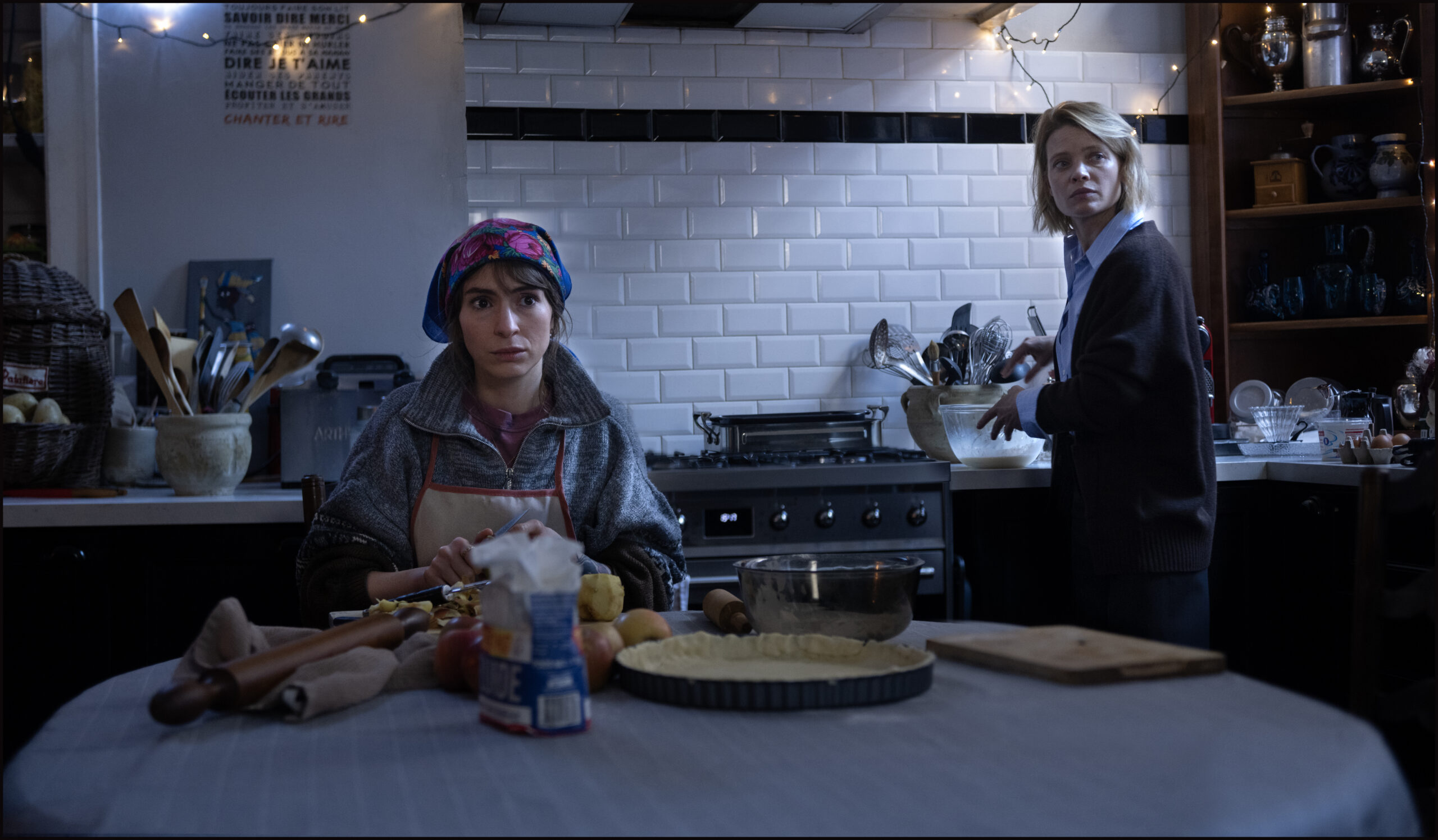
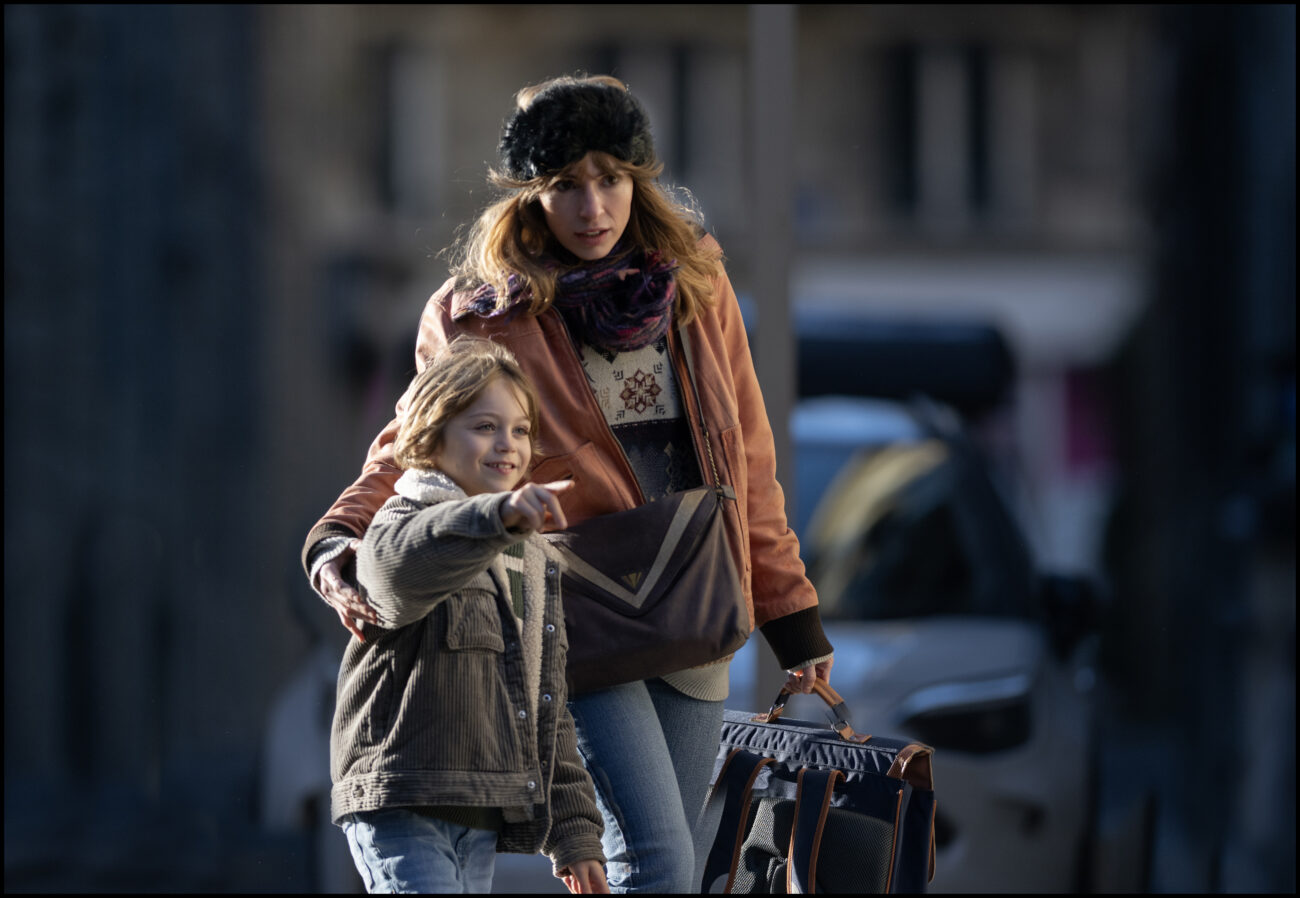
The Romanian Diary of a Chambermaid is based on the French writer Octave Mirbeau‘s satirical novel, over a hundred years old, which examines bourgeois hypocrisy through the eyes of a chambermaid. The film’s protagonist, Gianina, is a young Romanian mother who travels to Bordeaux to work for a wealthy couple involved in the arts. She cooks and cleans in order to send money back to her own family in rural Romania. Her primary-school-aged daughter waits at her grandmother’s, hoping her mother will come home for Christmas.
Gianina also ends up performing in a university community theatre production that aims to help “immigrants and the disadvantaged.” Fittingly, the production, based on Mirbeau’s novel, is looking for the most authentic performer possible, and a Romanian domestic worker fits the part perfectly.
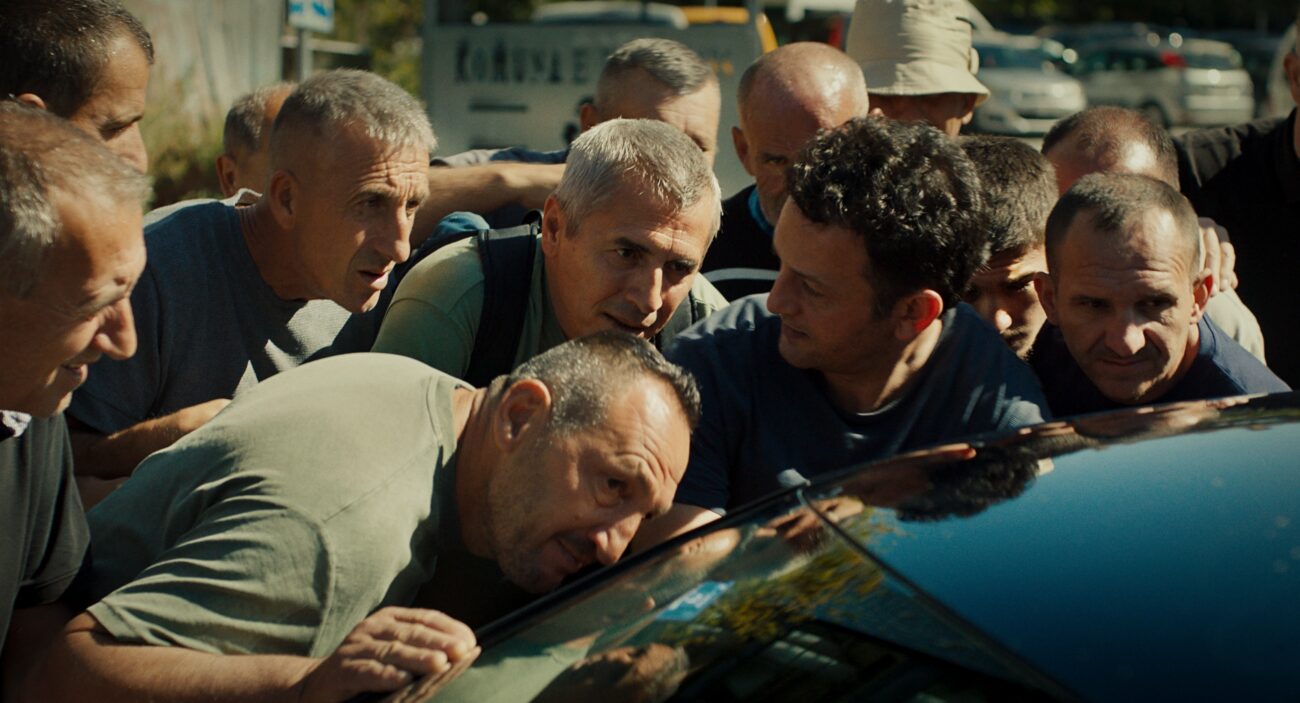
In the Kosovan film Shame and Money too, people move in search of work. A middle-aged man named Shaban leaves his home village for Kosovo’s capital, Pristina. Money is needed urgently, because one of the sons in the extended family has suddenly decided to go abroad, taking a share of his parents’ savings with him.
In both films, the wealthy try to understand the poor as long as it costs them nothing in terms of their own privileges.
In Diary of a Chambermaid, the couple who employ Gianina ask her to stay on longer in France to care for the wife’s sick mother. The host family, however, has no intention of cancelling their own skiing trip. Gianina is left to disappoint her own child. Through video calls, she watches the money she has sent home turn into firewood for heating.
In Shame and Money, the central characters’ relatives own a restaurant and live in a bright flat in an expensive part of town. Meanwhile, the protagonists are struggling. Shaban, looking for work, doesn’t want to accept handouts from his wealthy brother-in-law. The brother-in-law, in turn, is ashamed that Shaban is out looking for work alongside the other unemployed in the street.
“We have a name here, a reputation as a family. We have to be careful,” the brother-in-law says disapprovingly. Shaban’s wife remarks that shame is a luxury.
Talk of the East both horrifies and amuses
Both films deal with social problems that are not confined to Eastern Europe, yet both bring the East–West divide sharply into focus.
Laced with dark humour, Diary of a Chambermaid fully indulges in Western-centric stereotypes. The othering and exoticisation of Eastern Europe reach absurd proportions as the husband of the host family repeatedly brings up Gianina’s home country.
In one scene, the host family spends an evening with friends. One of the guests offers his geopolitical analysis: “We need a two-tier Europe: a West with real potential for rapid development, and an East that has been left behind.” The group debates what Ukraine should do in the current situation. According to the guest quoted above, the most sensible course would be for Ukraine to submit to Russia’s demands, with NATO abandoning the Baltic states and “Eastern Europe” altogether. No agreement is reached.
But luckily, there’s a genuine Eastern European in the house!
“Gianina, what do you think, coming from the East as you do, as a Romanian?” she is asked.
“I don’t know anything about politics,” she replies.
Gianina approaches these conversations from a different angle than the French guests do. She doesn’t relate to the theatre group’s discussions about animal rights. Back home, her grandmother used to carry kittens down to the river in her apron and drown them.
“That’s barbaric,” someone says.
Barbarism and backwardness are textbook examples of how Eastern Europe has been othered for centuries. The more easterly countries have long been lumped together and portrayed in the West as Europe’s “backyard” or as “a second Europe within Europe” (Todorova, 1997). This way of thinking is still visible today both in news headlines, for instance, and in art.
Although Shame and Money doesn’t explicitly address geopolitics or the East–West divide, when read alongside Diary of a Chambermaid it, too, can be interpreted through this lens. Eastern Europe is not simply a region defined on a map, but a way of classifying Europe. Even Finland lies, geographically, further east than Romania or Kosovo.
Migration born of necessity
In both films, someone leaves so that someone else can stay. Gianina moves to France so that her daughter might have a better life in Romania. In Shame and Money, Shaban is only meant to work temporarily in the city before returning to the village with his children.
The films depict two forms of migration, two kinds of “drain,” in which people leave their home countries in hope of a better livelihood: care drain and brain drain.
Care-related migration is often made up of women who leave low-income countries to work abroad as carers, sending money home to their families. In the process, their own children and homes are left in the care of others. In Diary of a Chambermaid, Gianina’s duties also include childcare, which causes her own daughter to feel jealous. Why does her mother look after a stranger’s son instead of her?
The other form of migration is made up of young adults who go abroad for work because employment prospects at home are bleak. In Shame and Money, the plot’s driving force is precisely a young man who leaves Kosovo. As he weighs up his decision to leave, someone tells him: “I suppose you want to go to Germany to look after old people.”
These are not phenomena unique to Eastern Europe. Care drain, however, has been identified as a phenomenon specifically in Romania, for example (see Panzaru and Gravina, 2024). While care work abroad can offer economic opportunities, it also exposes workers to precarity and exploitation. Kosovo, meanwhile, has Europe’s youngest population, yet unemployment is especially high among young adults, and a significant number of them move elsewhere.
In both films, poverty and lack of agency drive people to desperate acts. Both Gianina and Shaban find themselves caught between a rock and a hard place: personal wellbeing and their own hopes become secondary when what’s at stake is something as fundamental as making a living.
Art can challenge or expose
Both films contain visual details showing how history remains present in the here and now.
In Diary of a Chambermaid, Gianina records a video message for her daughter and shows her the stone faces set into building walls. These mascarons were made especially in Bordeaux in the eighteenth century, with black slaves among those used as models. The scene offers a glimpse of Europe’s history of exploitation and reflects it onto the present.
In Shame and Money, the camera lingers on a statue of Bill Clinton. Clinton played a significant role in the 1999 NATO bombing campaign against Serbia, which brought an end to the war in Kosovo. The scene nods towards history and the West, but leaves it to the viewer to decide what it’s saying. Perhaps, at the moment of its unveiling in 2009, it expressed hopes for a future that has yet to materialise.
Visually, both films are pleasingly ordinary. In Diary of a Chambermaid, the mother records updates for her daughter on her phone. The gap between the phone camera’s image and the high-quality footage around it underlines the divide — between East and West, between classes, and, in a sense, between EU member states themselves: in one shot, the EU’s starred flag and Romania’s stripes flutter side by side as a stray cat keeps watch. What becomes of those on the Union’s edge?
In Shame and Money, sound design plays a distinctive role, particularly through Kosovan and Albanian folk music. In one scene, the song Ani More Nuse plays, in which a young bride is asked: do you want pearls, or do you want money?
Art has the power to challenge entrenched assumptions and open up perspectives missing from Western historiography. Diary of a Chambermaid and Shame and Money do not overturn the image of a poor Eastern Europe. They reinforce it — while at the same time asking who built that image, and what lies behind it.
When Eastern Europe looks at itself, its gaze ultimately lands on the West too: on the people, the classes, and the structures whose way of life is only possible because someone else does the work for less.
Sara Harju
Sara Harju is a freelance journalist and a critic who has a Master’s degree in regional and cultural studies, specialising in the Balkans. Harju is a member of The Ulkopolitist’s European editorial team. The Ulkopolitist is an independent online media outlet founded in 2011 that covers international politics as well as Finnish foreign and security politics.
Sources:
Panzaru, Ciprian, Gravina, Gloria (2024). “Care Drain” from East to West: The Narrative of Romanian Women Migrant Working in the Italian Domestic Care Sector, Health & Social Care in the Community.
Todorova, Maria (1997). Imagining the Balkans. New York: Oxford University Press.