Nitrate Kisses
A pioneer of experimental lesbian cinema, Barbara Hammer’s first feature takes a collage-like approach to the erasure and concealment of queer experiences from the historical record.
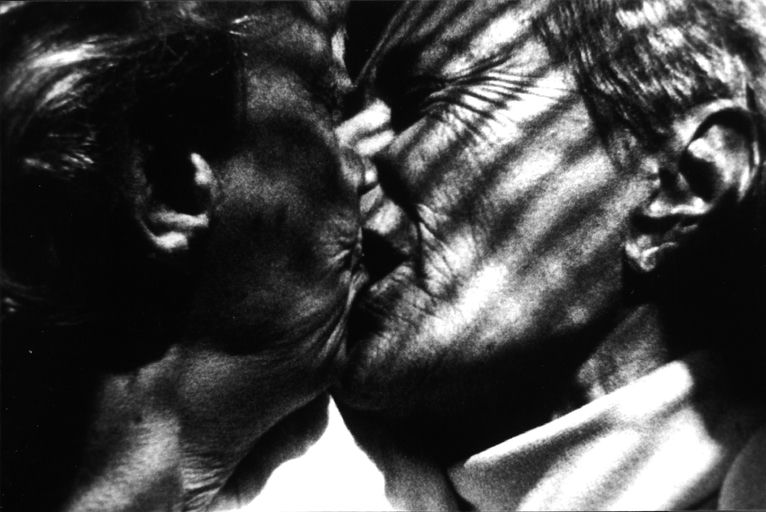
What gets left out of the historical record? Barbara Hammer’s Nitrate Kisses digs up forgotten stories from queer history through the means of experimental documentary filmmaking. This collage-like essay film combines archival footage, film history, interviews and gay sex to construct a counter-archive on its own terms.
The film’s title refers to cellulose nitrate film, the material format used for movies well into the 1950s. Nitrate film was highly unstable and extremely flammable; as it aged, it could even spontaneously ignite. Hammer uses nitrate as a metaphor for the lost and destroyed queer history of the 20th century.
Provocative and playful, the film is a product of its time in the best possible sense. In the spirit of New Queer Cinema, it refuses to wallow in the grief of the AIDS crisis, instead celebrating the erotic pleasures of gay sex as a form of political resistance. The film does not settle for existing images, but creates new representations by filming sex between four marginalised couples.
Barbara Hammer is a pioneer of lesbian filmmaking, whose influence on queer cinema can be seen especially in Cheryl Dunye’s indie classic The Watermelon Woman. An acclaimed landmark of experimental documentary, Nitrate Kisses remains as singular and relevant as ever.
Oliver Tomar
Screenings
-
Kino Engel 1Sat 19.9. at 19.15–20.2267 min, 1/2
-
Kino ReginaSun 27.9. at 16.15–17.2267 min, 2/2