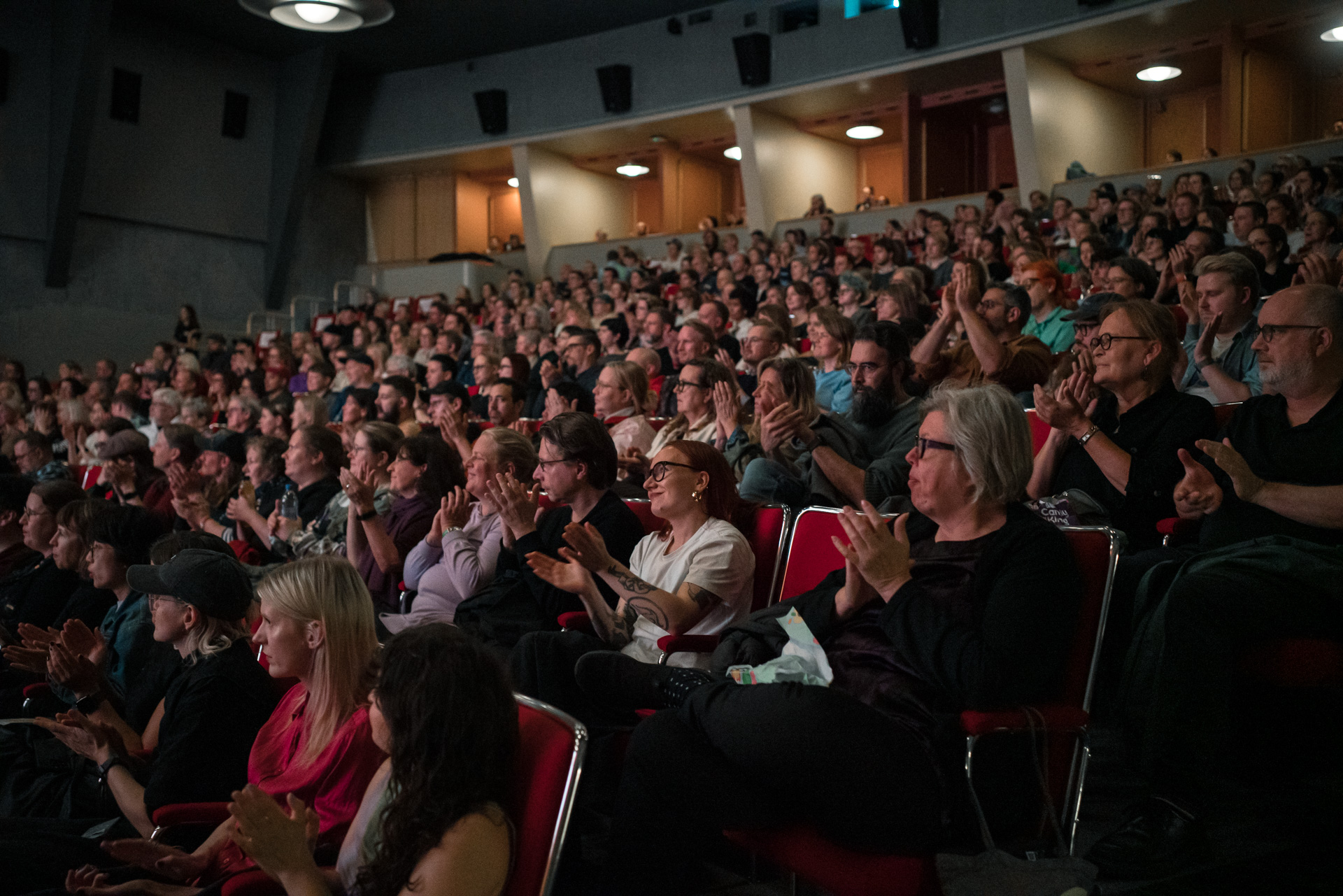
Finland’s biggest and most beautiful film festival delights film lovers once again, as people gathered for a sold-out opening screening at Bio Rex Lasipalatsi on a Thursday evening. The lobby was full of cheerful people with the festival mood clear on their faces. The atmosphere was expectant since the first opening gala screening was about to begin and the film was the long-awaited La bola negra. It was the first screening in Finland for this queer epic whose two directors, Javier Ambrossi and Javier Calvo, received the award for Best Director at Cannes.
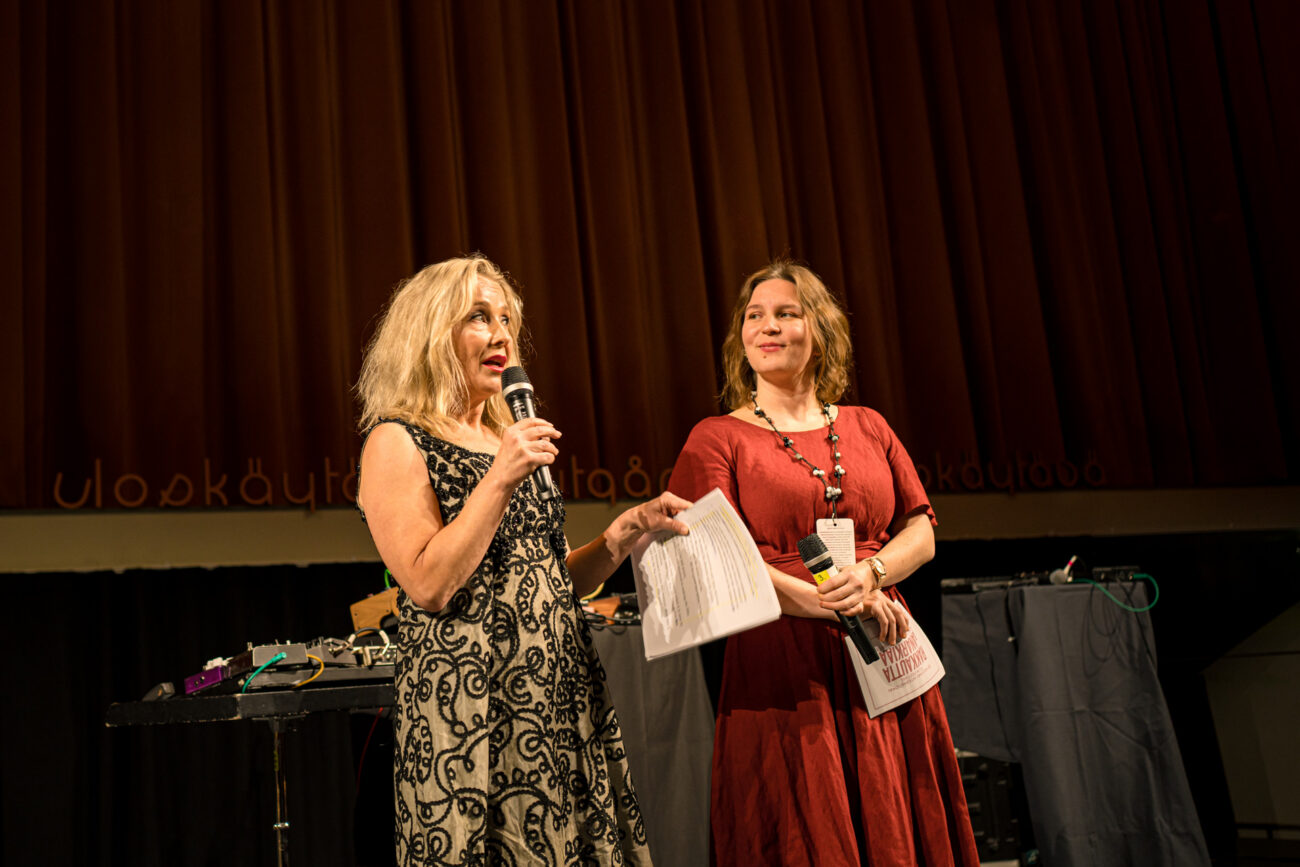
Before the screening, composer Ilari Heinilä and The Black Lodge band filled the room with charming and sweetly dramatic music. The performance was followed by opening words from Love & Anarchy’s CEO Pauliina Ståhlberg and Programme Director Outi Rehn.
Ståhlberg highlighted the communal experience and human connection in film. Films are made by people, with people and for people.
“What truly makes a film complete is you. You, the audience. Films are meant to be experienced together,” Ståhlberg said while looking out at the packed auditorium. Rehn also reminded the audience that the festival aims to shine a spotlight on diverse voices, so that the world might be a better place for everyone.
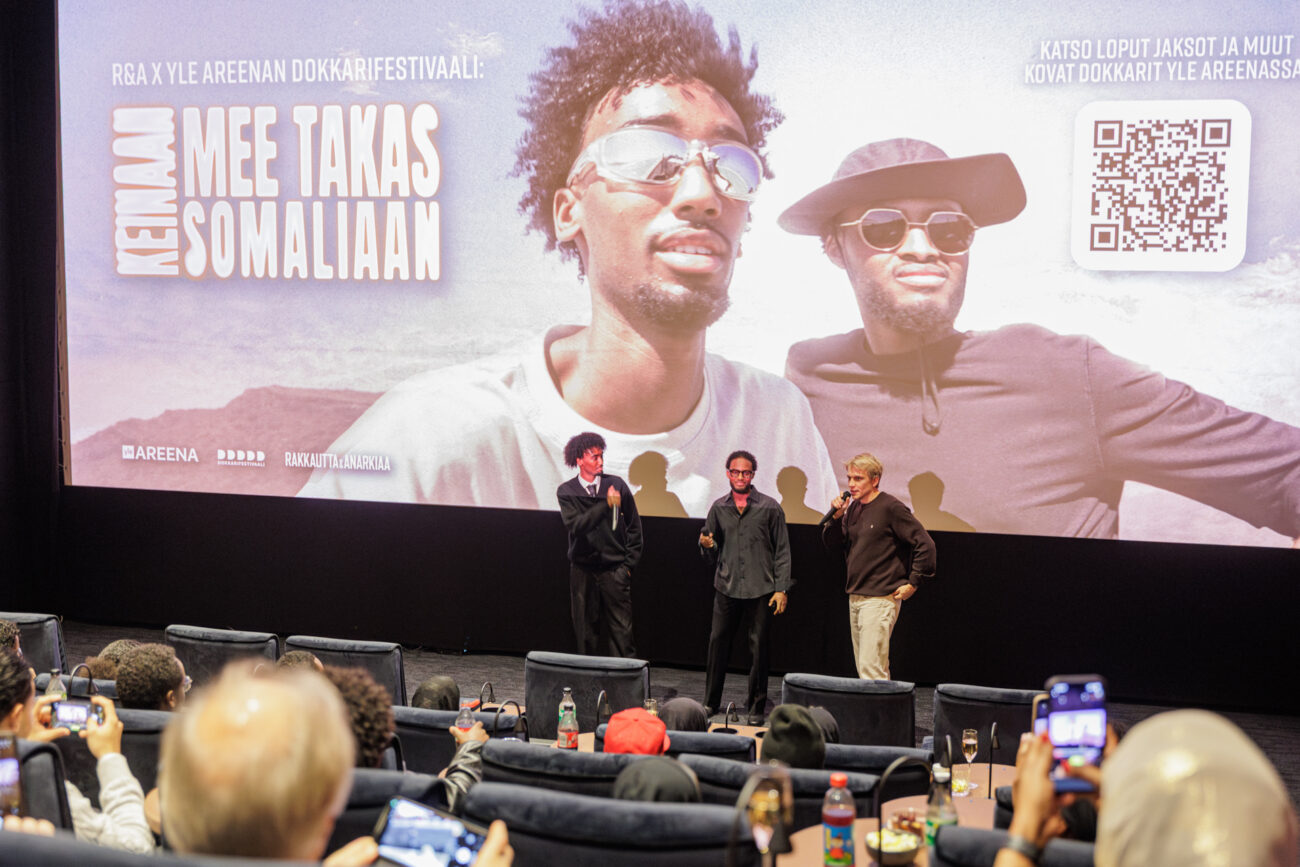
The opening day also offered something completely new with Love & Anarchy and the Yle Dokkarifestivaali joining forces. The first three episodes of a new documentary series, Keinaan, mee takas Somaliaan, were shown at Gilda. The lobby was bustling with friends and family of the filmmakers Abdirahman Keinaan and Hussein Hamsa along with Love & Anarchy ticket holders. The sounds of root vegetable chips and popcorn crunching filled the room as journalist Jaakko Keso interviewed the duo before the screening. During the interview, Keinaan and Hamsa opened up about their experiences between two worlds, turning the gaze inward and defining their target audience. At the heart of the discussion was how to make the series appealing to a wider audience, both in Finland and Somalia.
“For some, it’s a mirror; for others, a window,” Keinaan aptly summed it up.
R&A Talks x The Ulkopolitist: The Red Hangar
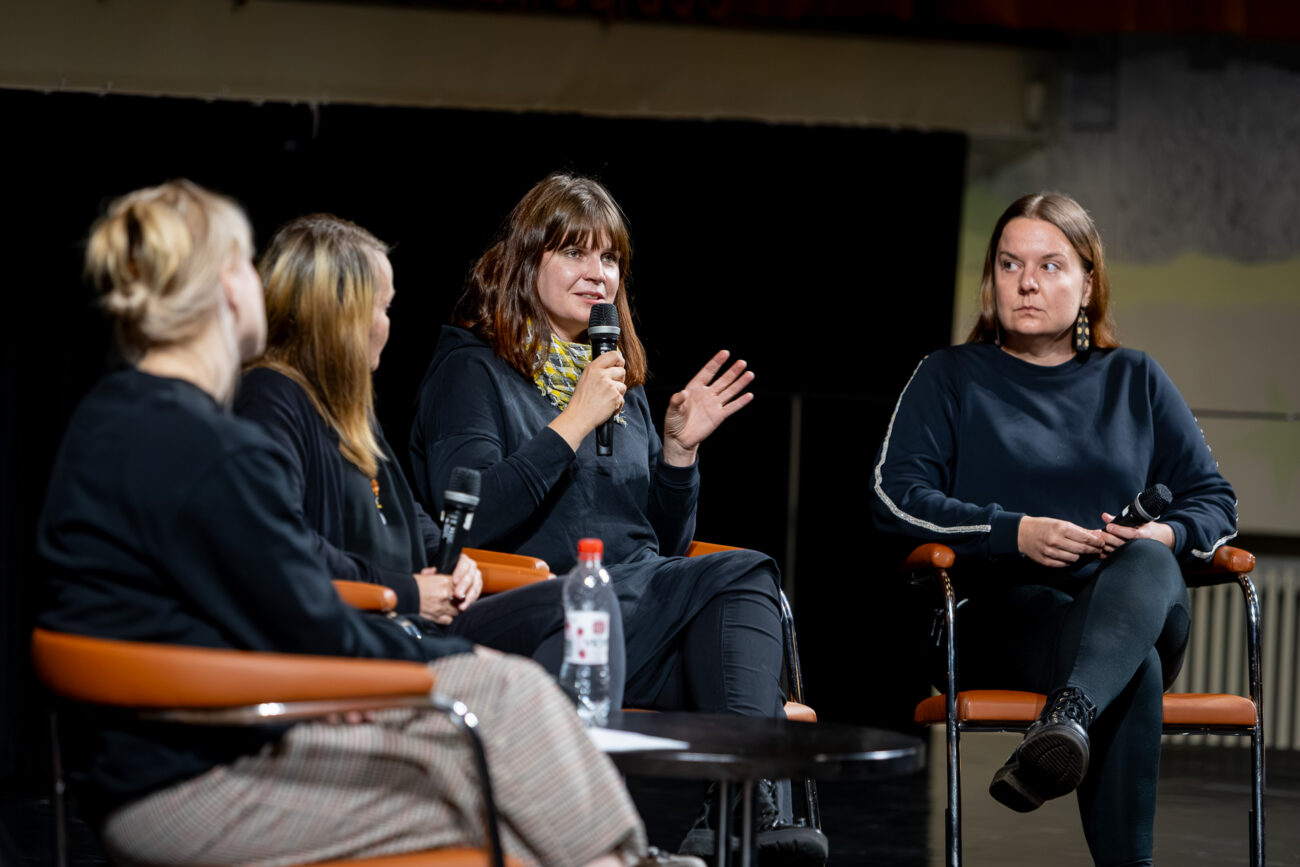
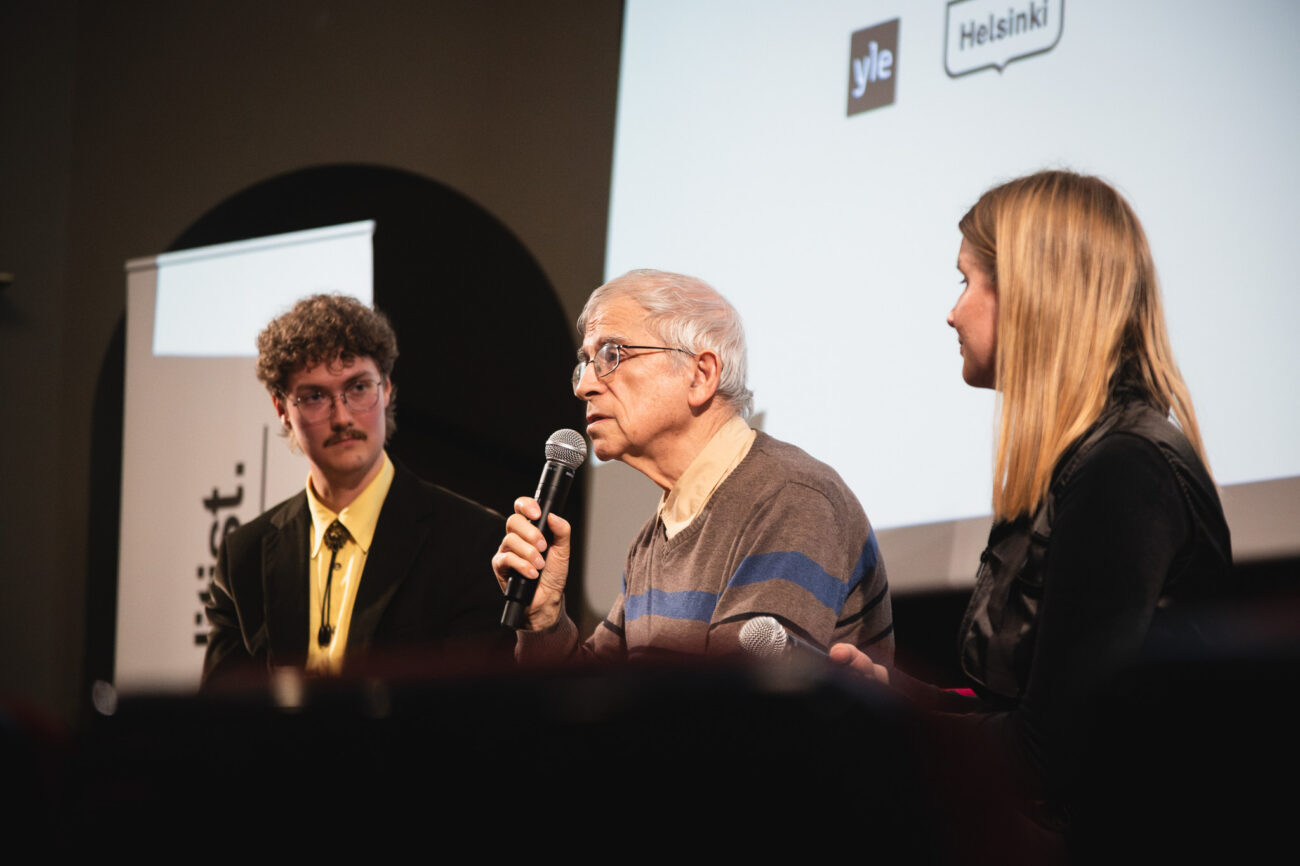
A panel discussion organized by the online media outlet The Ulkopolitist and Love & Anarchy highlighted the importance of art as a form of resistance. The discussion followed The Red Hangar, a film depicting the military coup in Chile.
The 1973 coup was the result of a situation in which citizens’ “perception of reality split in two and the situation escalated,” as Ella Virtanen, a doctoral researcher at the University of Helsinki specializing in Latin America, summed it up. According to Virtanen, the film conveyed this situation particularly well: taking place over a period of roughly two days, it showed how public space can change completely when the social contract breaks down. The result is brutal violence.
As the discussion progressed, the descent into a brutal dictatorship began to sound frighteningly easy. Alfonso Padilla, a researcher who fled Chile following the coup, said that the initial goals had been noble: “The goal was a democratic government that would help the poor.” The parallels with the present day sent shivers down the spine. Padilla witnessed the rule of the far left in his youth, and now he is watching from the sidelines as the far right gains strength.
Virtanen noted that people fail to understand what allowing the far right to come to power would actually mean. She referred to studies showing that voters for the far right do not necessarily actually support the violence committed by representatives of those movements.
Films have a role to play in curbing extremist movements’ aspirations to power. Tomi Kristeri, chair of The Ulkopolitist association and moderator of the discussion, described how films can be used to practice a “politics of remembrance,” ensuring that the horrors of history are not forgotten.
After being imprisoned in the aftermath of the revolution, Padilla witnessed firsthand the power of art as a form of resistance. He taught dozens of people to play the guitar and even founded a singing group. Art was a way of maintaining hope. He described how every act carried out in the name of art was a victory over the dictatorship, because art was a sign of human agency that the repressive regime had failed to crush.
R&A x Puistokatu 4: Everybody to Kenmure Street
On Friday afternoon, people could escape the September rain at this year’s free screening organized by Puistokatu 4. In the packed hall in a lovely old wooden villa, audiences watched Everybody to Kenmure Street, an activist documentary directed by Felipe Bustos Sierra. After the screening, Puistokatu 4 members Pihla Soinnunmaa and Siiri Hänninen discussed the film and the importance of community in protecting the Stansvik forest, together with Puistokatu 4’s executive director Minttu Jaakkola.
Everybody to Kenmure Street tells the story of a community’s resistance to an immigration raid on Kenmure Street in Glasgow in 2021. The documentary depicts the events in detail and with a human focus, while also showing how members of the community organize themselves to oppose the deportation of their neighbours. Key themes include civic activism and its history in Scotland, the power of communities and networks, as well as love and caring for other people.
The atmosphere after the screening was emotional and warm, and the hall was filled with conversation about the film’s themes. “Really moved, and at the same time really powerful,” Soinnunmaa said when describing her feelings after the film and its portrayal of activism. Hänninen also connected with the film’s depiction of activism to activism in support of Palestine in Finland and Germany.
According to Soinnunmaa, the film brought together many of the issues that have also been present in Stansvik, such as the fact that everyone in a community can find a role for themselves. A few brave people who, for example, crawl under a van or climb a tree can set off a major snowball effect, while others send messages through their networks or buy food for protesters.
Love is at the heart of the Kenmure Street community, and love for Stansvik has likewise been a driving force behind Soinnunmaa’s activism. The feeling that there is nothing one can do to change things can be paralyzing, but change is nevertheless possible through even the smallest actions. Hänninen also encouraged the audience to reimagine what is possible and to believe that things can be done differently.
R&A Talks x Animalia: Hen
In the discussion following Hen, Animalia’s animal protection specialist Laura Uotila, Pinja Mustajoki, who has researched the role of animals in front of the camera, and Animalia’s special adviser Tiina Ollila considered whether humans can truly make a film from an animal’s perspective.
The film’s adventure story is a distinctly human starting point for examining animals. According to Mustajoki, animals are often seen as objects in films, and even if the camera is physically lowered to a chicken’s perspective, that does not mean the viewer has entered the animal’s mind. The story can also give the impression that the screenplay was originally written for human characters, but that the protagonist was ultimately changed into a chicken. Uotila therefore hoped that the animal would be at the centre of the story, rather than being an addition to a human story.
Although the film’s tendency to anthropomorphize animals drew criticism from the panelists, Mustajoki noted that anthropomorphism also has its place: it can inspire empathy towards other species. Although, according to Uotila, the film’s director has denied that it is an animal-rights film, this does not rule out criticism of the mistreatment of animals. Despite—or perhaps precisely because of—its dramatic plot, the film directs viewers’ sympathies towards the other species that are routinely oppressed outside the screening room.
The panelists agreed that a dramatized adventure film can contain just as much potential for social change as a documentary saturated with shocking footage. The former can also attract audiences who, when confronted with slaughterhouse footage, might close their eyes and deny the brutal reality.