A film is a snapshot of its time, a mirror of reality. Beings from various eras – ideas, atmospheres, shared experiences and crises – are recorded into a film among other art mediums. The ecological crisis, admittedly our most complicated and expansive shared threat, year after year, increasingly defines what sorts of films we make in addition to what our living conditions look like.
But what can we expect from a film in the generation of the eco-crisis? At least recognition of the ecological crisis: we must accept and take into consideration that an existence larger than humans is under threat. I, myself, also hope for the critical examination of the power structures interwoven into the eco-crisis, a shift in perspectives and investigation into the complexity of our relationality; something that politics and public discourse rarely touch upon due to their nature.
A central part of the needed change is the radical rethinking of interspecies relationships. How do we perceive our role in the biodiverse tapestry of life? What are our moral obligations like in relation to more-than-human life? In what ways do we understand our lives to be interconnected with other life?
Fortunately, this autumn we do not have to ponder these big questions alone, as we can journey into the indistinct boundaries of species together, sharing collective dreams brought to life by Love & Anarchy’s More Than Human -programme selection.
Polarless bears, landless Indigenous residents
Relationships that cross species boundaries within the context of the eco-crisis are organically discussed in Nuisance Bear (2026), a film that redefines the nature documentary genre. The film follows the coexistence of polar bears and humans – in addition to the Inuit and white settlers – in Hudson Bay, crafting a comprehensive portrayal of how indelibly connected both species’ lives are to one another, and to colonial oppression.
Interspecies boundaries in this area cannot be properly examined without considering the impact of Canadian settler colonialism. The dramatic effects of this are felt just as strongly in the lives of polar bears as they are in the lives of the Inuit people. Through the spread of settler occupation and landscape modification, the habitat of polar bears has changed, and the once undisturbed territory dwindled. The assimilation policies practiced by Finns in Sápmi – the deliberate and violent erasure of Indigenous cultural practices – have similarly contributed to the uprooting of Inuit ways of life.
Prior to the intense warming of our climate, polar bears spent the majority of the year in the frozen Hudson Bay which meant a more peaceful way of living for both them and the human population of the area. From the human perspective, polar bears have become a nuisance, but also an attractive tourist magnet. The consequences of the development of settler infrastructure to control and commodify polar bear populations have spread north across the Bay into the Inuit settlement of Arviat. The stronger presence of polar bears in Arviat is a danger to Inuit who do not possess the resources or desire to oversee the surveillance and control of the polar bears. The film’s Inuk narrator, Mike Tunalaaq Gibbons, details the different attitudes relating to polar bears as follows:
“The tourists come because they want to see a bear. They believe that polar bears are going extinct. They want to see bears in the wild before it is too late. Inuit never say, “I want to see polar bear.” If you do, one might show up when you don’t expect it.”
Life in liminal spaces
The polar bears of Hudson Bay’s shores have been forced to adapt to the area’s changing living conditions. As a result of this adaptation, they have come to fear humans less, and have started to live on the fringes of human-populated areas. They have become so-called liminal animals, more-than-human animals that benefit from proximity to people. Philosophers Sue Donaldson and Will Kymlicka in their groundbreaking work, Zoopolis: A Political Theory of Animal Rights (2011), define liminal animals as creatures who live among humans but are not domesticated. The liminal animal as such does not conform to the typical domesticated/wild – binary.
Another film in the programme depicts some sort of liminal animal existing in this intermediate space. Sirens Call (2025), hazily floating somewhere between documentary and fiction, portrays Una, who identifies with merfolk, as they journey through the flashing neon lit United States; glowing yellow against the artificial cities and relentless desert landscapes. In their own words, Una is a hybrid, only partially human. When they were born for the first time, deserts were still oceans. There were chimeras – combinations of animals and humans, of machines and bodies.
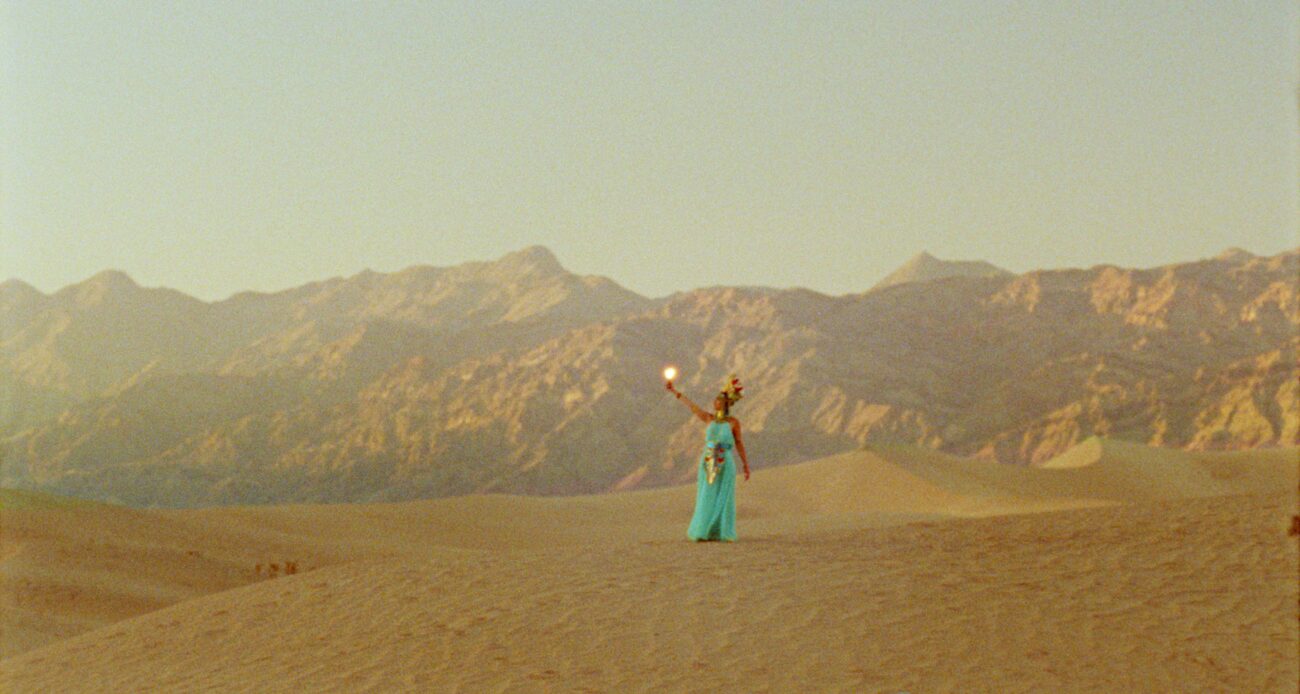
In the background of Una’s voiced thoughts, the echoes of feminist studies researcher Donna Haraway’s Cyborg Manifesto (1985) can be heard: “A cyborg is a cybernetic organism, a hybrid of machine and organism, a creature of social reality as well as a creature of fiction.” The social reality of marginalized groups in present-day America is so despairing that even political imagination gasps for air like a fish out of water. Still, Sirens Call succeeds with the help of cinematic imagination to mirror the Cyborg Manifesto’s observation that “the boundary between science fiction and social reality is an optical illusion.” The film dreamily walks its own paths on either side of the defining boundaries of our social realities and divides. The artificial and permeable nature of species as well as other forces used to divide our social realities, such as gender, sexuality and race, are revealed. If you’re still asking, “What on earth is a mermaid?” you’ll receive, “What on earth is a human?” as your answer.
Collective unfolding, messy connections
“There is no separation between ourselves and nature. Everything is interconnected. This story about a bear is a story about us,” Tunalaaq Gibbons affirms in Nuisance Bear. Additionally, Una reflects how they have “developed during another time where everything is perceived to be interconnected with one another.”
The concept of the interconnectedness of all things – of the collective unfolding of existence – turns the worldview underlying the eco-crisis on its head. It dislodges and renders meaningless the hierarchical binaries that form the foundation of systemic oppression. No longer will humans be above animals, culture over nature, mind over body.
In the Western academic context, this shift in worldview is known as new materialism. Instead of focusing on the world’s social construction, new materialism focuses on its material construction. Instead of subjects and objects at the centre of research, material flows that transcend the cultural-linguistic and life/not-life binaries are in focus.
Indigenous studies researcher, Kim TallBear, has pointed out that this change in worldview is not as new for everyone. According to TallBear, among Native American peoples, a similar way of understanding the world is already ingrained into how they approach the world. From their perspective, we are closely entangled in intimate relationships with non-human beings.
Where TallBear calls for the disentanglement of colonialism from science, Nuisance Bear attempts to unravel the colonial legacy of nature documentaries. Nature and its more-than-human life is not depicted as something distant and detached, imprisoned as a mere subject by the camera. Instead, the relationships between Inuit, settlers, tourists, polar bears and other animals are portrayed as messily interwoven. To borrow Haraway’s terms that dismantle these binaries, Nuisance Bear paints a picture of Hudson Bay’s naturecultures and its companion species.
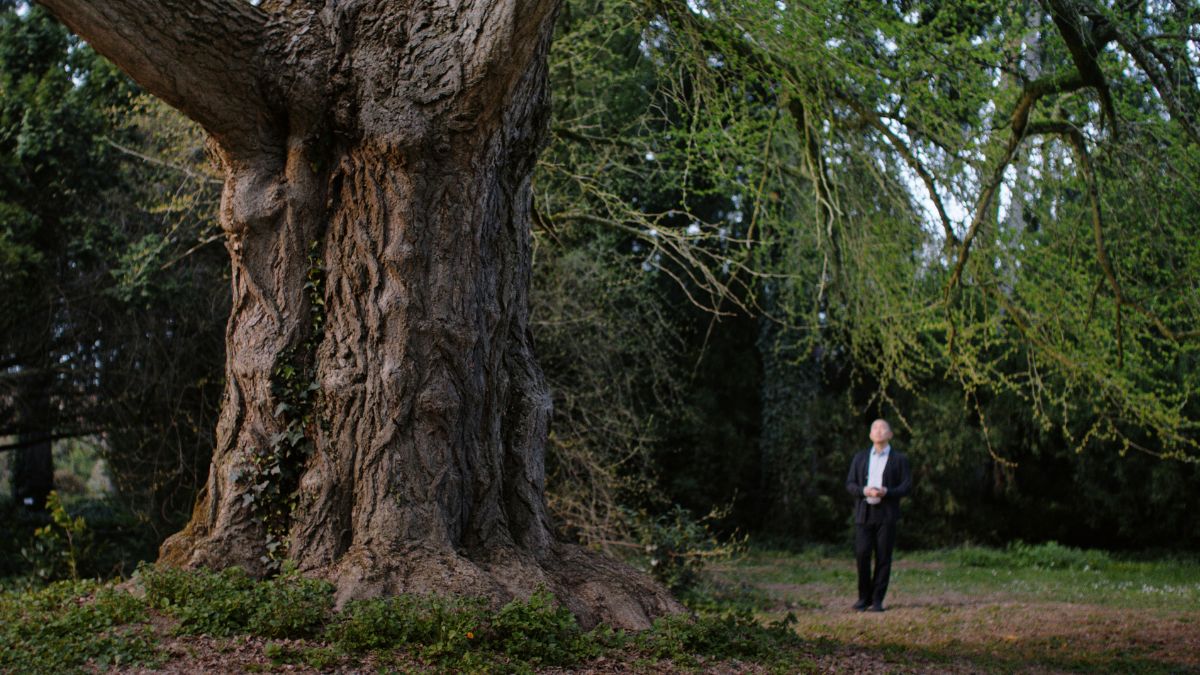
The evolution in the worldview shifts of Western science is explored in the programme’s film, Silent Friend (2025). Already familiar to the Love & Anarchy audience, Hungarian Ildikó Enyedi’s (On Body and Soul, Love & Anarchy 2017) new release depicts the relationships of humans and plants in an academic environment through three separate eras. The stories, taking place in the early 20th century, 1970s, as well as during the Covid-19 pandemic, craft a layered portrait of breakthroughs in botany.
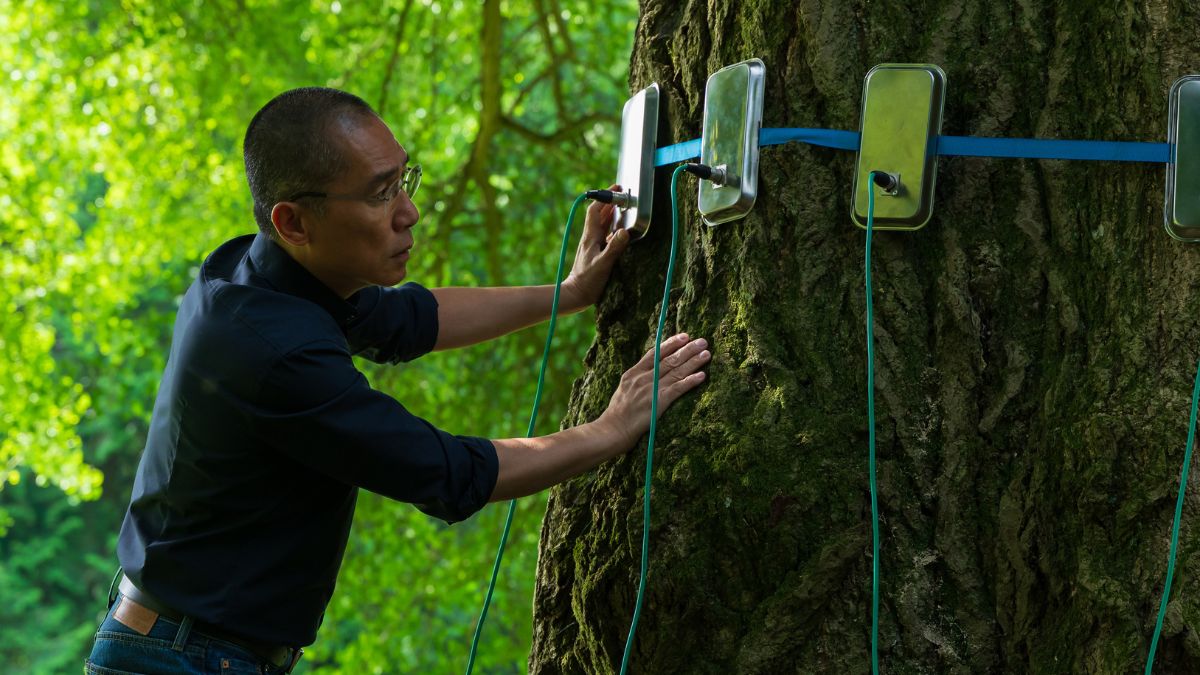
In the masculine milieu of the early 1900s, Carl von Linné’s legacy of subjection to taxonomic control and order remains deeply rooted. Still, the coronavirus pandemic enables neuroscientist Tony Wong (Wong Kar-wai’s frequent collaborator, Tony Leung Chiu-wai),who usually studies the brains of babies, to experience creative research explorations into the inner worlds of trees. Where von Linné and his academic predecessors attempted to make sense of the world of plants by seeking to understand them through the lens of a human-centric linguistic system, Dr. Wong fosters sensitivity and watchfulness throughout the film’s epochs as he ponders the rising main character, Ginkgo biloba or maidenhair tree, way of approaching the world. The scene in which Dr. Wong sits with an EEG cap measuring his brain waves while hugged by a sensor belt in the lap of the Ginkgo, is a cyborgian depiction of the convergence of nature and culture that dismantles species hierarchies – in addition to serving as an image of interspecies companionship which simultaneously nurtures the miracle of similarities and the insurmountability of differences.
Shifts in perspective fueled by cinematic imagination
Throughout its history, the film medium has, in many creative ways, managed to dive into the depths of both the familiar and the foreign. For this reason, films, along with other methods of storytelling, create meaningful avenues into the expansion of our empathetic understanding.
As philosopher and animal ethicist Bernard E. Rollin (2013) notes, from a scientific perspective, we do not have a more reliable avenue to grasp the experiences of other humans than we do the experiences of animals. According to Rollin, we inevitably have to rely on “mentation,” “the generalization of one’s own mental life to other individuals.” So that we can see our relationships that transcend species boundaries in a new light, it is of utmost importance to let cinematic imagination also expand into more-than-human minds and experiences, and other ways of existing.
The ability of films to imagine more-than-human minds and experiences is perhaps depicted the most clearly through the programme’s selected work, Good Boy (2025). On the surface, the film represents the traditional haunted house horror subgenre, but the experience of horror is expressed from the perspective of man’s most furry and loyal companion, a dog. The story begins when a dog, Indy, joins his mentally disturbed human friend, Todd, to his family’s abandoned home where ghosts burrow themselves under the skin of all kinds of beings.
Good Boy is entirely told from the perspective and world of experiences of Indy. The viewer sees, hears, and experiences the world and its horrors through Indy. The world takes shape from a four-legged and ground-level visual perspective. Furthermore, the sensory sensitivities of canines, especially to odours and sounds, are constructed through the materialization of Indy’s surrounding environment. The sensory alertness and sensitivities commonly associated with dogs work hand in hand with the horror genre as an insightful basis for non-material perception in which evil manifests into reality through different sensory experiences.
Nuisance Bear also boldly employs the film’s audiovisual toolkit to imagine the horror that more-than-human beings experience. When officials in control of the polar bears shoot a bear that, according to them, found itself too close to a human-populated area, with a dizzying dose of a tranquilizer, we experience this shift in consciousness through the film’s audiovisual storytelling. The audio is reduced to encompass the bodily experiences of the bear. When we begin to hear the gasping breaths and heavy heart rate, it is like we, ourselves, are in the bear’s flesh. Our breathing, heartbeat, and the world around us slow down. We unsteadily sit down… We find ourselves laying in the grass… The world around us darkens.
Silent Friend succeeds in portraying just how radical changes in perspectives can be that film as a medium can accomplish. The film is full of different visual and experimental representations of the plant world – from microscopic close-up shots to timelapses and underground imagery of root systems. The plants are often the focus of shots, with humans fading into an obscured and abstract background for the plant gaze to take centre stage. The timelapses and presence of the Ginkgo throughout the epochs remind the viewer of the completely different spatiotemporal nature of plants – in addition to our reliance on sensory limitations to relate to plants.
In this way, Silent Friend establishes plants and our relationships with them as the central way of perceiving the world. This kind of radical shift in perspective brings to mind a film that revolutionized ways of seeing the world, Microcosmos (1996). The observations of the world of insects with never-before-seen definition made possible the discovery of familiarity with the small inhabitants of our planet that, due to their size, had previously remained outside the scope of what people could readily identify with.
We are always relying on somewhat feeble information when it comes to understanding the minds and experiences of other beings. Through science and films alike, we can still create some sorts of representations of these other experiences of existence. Like the botanist Alice Sauvage, portrayed by Léa Seydoux, in Silent Friend ponders: “What would you do if you want to connect with a being but have no common language? You are curious, but you can’t ask questions. If you are a researcher, you are lucky. You can always design a new experiment.”
There is also luck in the ability to turn, with the curiosity of a researcher, to filmmakers who approach the minds of more-than-human beings – and immerse oneself in the miraculous cinematic worlds of interspecies boundaries.
Pöly Julkunen
REFERENCES
Films
Good Boy (2025, dir. Ben Leonberg)
Microcosmos (1996, dir. Claude Nuridsany & Marie Pérennou)
Nuisance Bear (2026, dir. Gabriela Osio Vanden & Jack Weisman)
Silent Friend (2025, dir. Ildikó Enyedi)
Sirens Call (2025, dir. Miriam Gossing & Lina Sieckmann)
Literature
Donaldson, Sue & Kymlicka, Will. 2011. Zoopolis. A Political Theory of Animal Rights.
Haraway, Donna. 1985. A Cyborg Manifesto. Science, Technology, and Social Feminism in
the Late Twentieth Century.
Haraway, Donna. 2003. The Companion Species Manifesto. Dogs, People and Significant
Otherness.
Rollin, Bernard E. 2013. “Scientific ideology, anthropomorphism, anecdote and ethics”.
In the work Aaltola, Elisa (ed.). Introduction to Animal Philosophy. Trans. Johanna
Koskinen; original work published in 2000.
TallBear, Kim. 2017. “Beyond the Life/Not-Life Binary: A Feminist-Indigenous Reading of
Cryopreservation, Interspecies Thinking, and the New Materialisms”. In the work
Radin, Joanna & Kowal, Emma (ed.). Cryopolitics: Frozen Life in a Melting World.
Please note: The citations of films and texts are the writer’sown translations, with the exception of Rollin’s text, which is translated by Johanna Koskinen. In some of the film citations, the writer has used the English subtitles as a source which are translations from the original languages themselves.