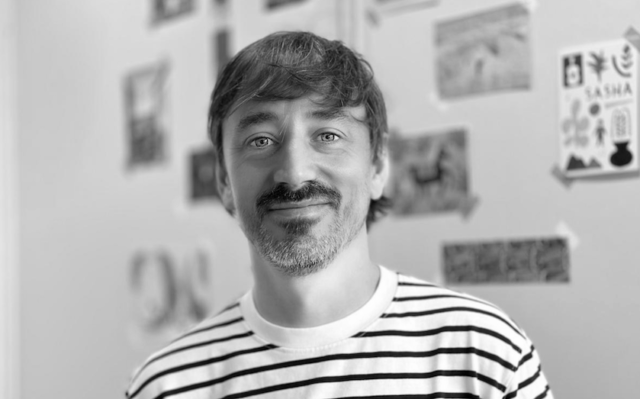
Finnish Film Affair was thrilled to have Pierre-Alexis Chevit, Head of Cannes Docs, serve as one of the jury members selecting the documentary projects for this year’s Showcase Day, one of FFA’s highlights. With over a decade of experience, Chevit leads Cannes Docs, the tailored industry program and networking platform for documentary filmmakers and professionals, as part of the Marché du Film – Festival de Cannes. His impressive background also includes programming for a wide variety of festivals and markets –Short Film Corner, Cinéma du Réel, Cinéma du Québec à Paris, among others.
FFA grabbed his attention for a quick but insightful conversation. In the following interview, Chevit shares his thoughts on film financing in complex times, the importance of networking for filmmakers, and where creativity lies nowadays for him.
FFA: Running Cannes Docs is similar to being at the centre of a hurricane: networking, hot conversations, and the latest industry trends. That is why this first question seems almost mandatory: what are you hearing more about lately?
Pierre-Alexis Chevit: It seems to me that one of the main pressing concerns in conversations has to do with the ability to keep producing independent, non-formatted, politically and socially engaged documentary cinema. The forces pushing against this vital ambition are multiple and powerful –from extreme-right ideologies to hyper-technologism–, and these forces threaten everything, everywhere. On the other hand, I feel we should be talking more frequently and more effortlessly about diversity, equity, transparency, and accountability.
FFA: This makes sense, since in the arts, especially in documentaries, the intertwining of art and politics is almost inevitable. Diversity and equality are also political themes in a sense. How do you see filmmakers addressing political themes in their work today? What is different from, say, a decade ago?
P-AC: This intertwining is the very beauty of documentary cinema and precisely what makes it so unique and essential to our societies. Bold, courageous, passionate filmmakers take on this major responsibility in all four corners of the planet. The difference from years ago is that nowadays the global context is increasingly tense and constrained by extremely insidious forms of (self-)censorship. It is also shaped by institutional attacks against the genre’s entire ecosystem itself. In my opinion, the excessively tech-oriented new Creative Europe MEDIA program to come, and recent drawbacks regarding documentaries at Berlinale are serious, alarming symptoms of this current state of things.
FFA: You mention important challenges. What can the filmmaking community do to face them?
P-AC: Stand together, get organised, lobby, speak up. And keep making the films they want to make, whatever happens.
FFA: Another very pressing obstacle in the industry is financing, or the lack thereof. Are you seeing any new or bold emerging ways of film financing?
P-AC: In my opinion, the financing of documentary film cannot and will not work without public funding, or private funding that focuses on the general interest and the common good. Tech-oriented, entertainment or commercial-only logics are non-viable. If we think in terms of funding and career sustainability, one source of inspiration could be the Chicken & Egg Award. This award provides a $75,000 cash prize, out of which $50,000 is an unrestricted amount that allows self-identified women and gender-expansive filmmakers to decide how they will use the funding to support their individual creative and business practices, stretching beyond the traditional fully project-based funding itself.
This model is a great example of a financing solution that can allow artists who are not in positions of power –societally or financially– to embrace an unrestricted filmmaking career, and gain creative freedom and independence. Without these proposals, we will not be able to change the power structures in place and walk towards greater equity in all dimensions.
FFA: To even get to the possibility of financing, networking plays a great role in the industry. FFA 2024 will be seeing plenty of emerging filmmaking talent in the networking field. From your perspective as Head of Cannes Docs, given all the hectic possibilities at a big event –one-on-one meetings, workshops, informal gatherings– what do you feel is unmissable?
P-AC: Concretely speaking, at such markets and events, everything is relatively unmissable. You need to be full on! Now, that said, yes, the experience can be very intense, and at times, even exhausting and overwhelming. Although this is definitely part of the game, at Cannes Docs, we deeply believe the physical, emotional, and psychological toll should never be problematically high. It’s useless and counterproductive to end up completely crushed by these networking obligations. To address this, we attempt at making our program as protective, unwinding, easy-going, and ”non-violent” as possible – there are ways to do so. That’s what we do, and filmmakers really thank us for that.
FFA: To finish, here’s an open question to interpret and answer as you wish: where is creativity nowadays?
P-AC: Creativity is everywhere, as long as you’re willing to decenter, deconstruct, question and challenge your gaze and preconceptions. It is essential for diverse filmmakers everywhere to have a true, sustainable, unrestricted and respectful possibility to share their cinematic, political, and aesthetic visions.