The Girls
Three actors reinterpret ancient comedy in this landmark of feminist cinema from Mai Zetterling—still strikingly relevant today.
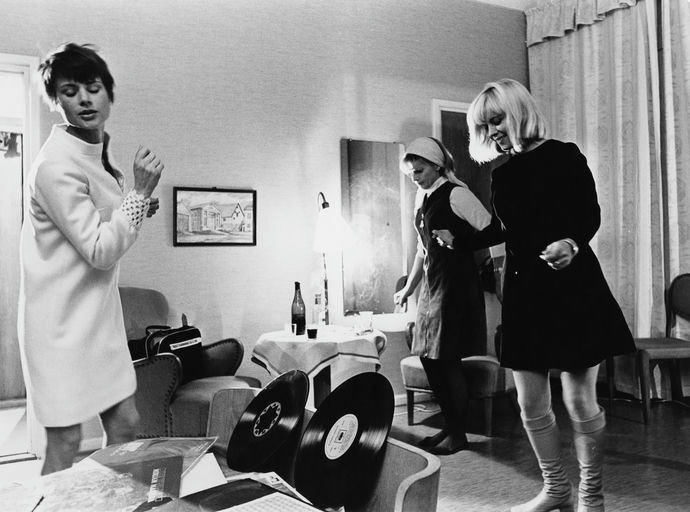
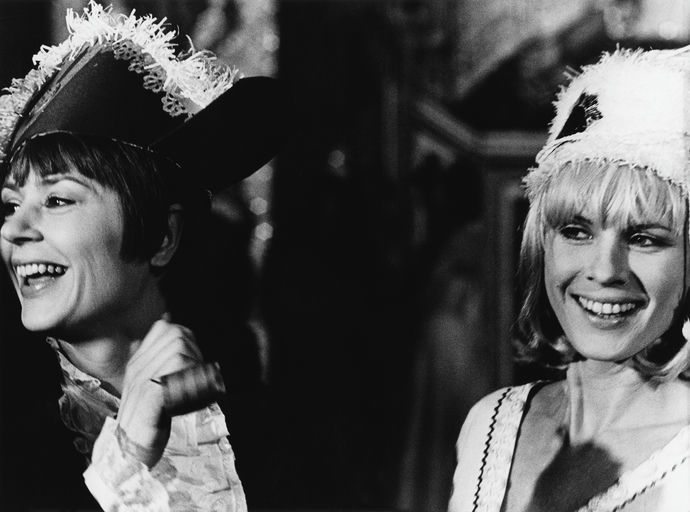
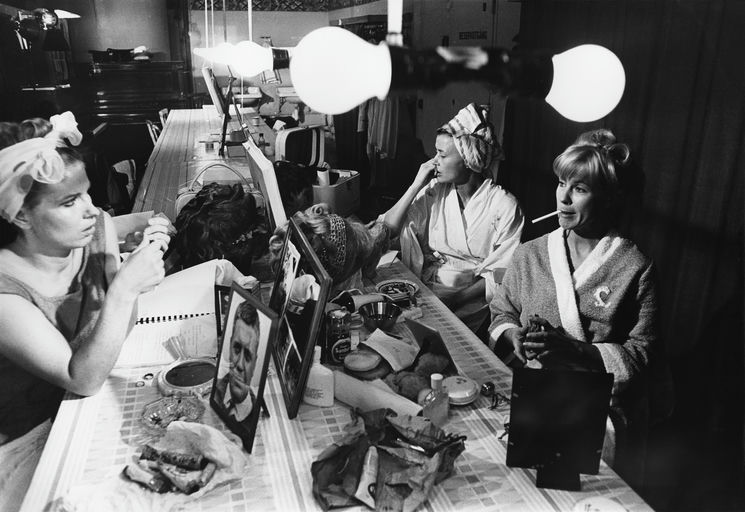
The Girls (1968) follows three actresses as they tour with their production of the play Lysistrata. In Aristophanes’ comedy, the women go on a strike of passion with the intention of pressuring the men to end the war.
As the tour continues, the actresses encounter injustices in their own lives and question the gendered structures of society. Gradually, the lines between play, reality, and dream begin to fade. Despite its heavy themes, the film is full of joy, humor, and spectacular scenes. The film highlights art’s ability to speak to people: the world needs a desire to discuss and understand.
Mai Zetterling (1925–1994) was one of the first Swedish actors and film directors to have an international career. Her work as a director is permeated by a feminist perspective, in which the experiences of marginalised groups and sexuality, for example, are presented in a class-conscious, critical framework that disrupts traditional cinematic expression and narrative.
Zetterling’s films sparked controversy upon their release. Especially The Girls, which challenged the patriarchy, was the subject of discussion. 100 years after Zetterling’s birth, her work as a director is increasingly recognised as a significant example of early feminist cinema and the female gaze.
Alina Tolvanen (translated by Pauliina Jännes)
Trailer
Collaboration