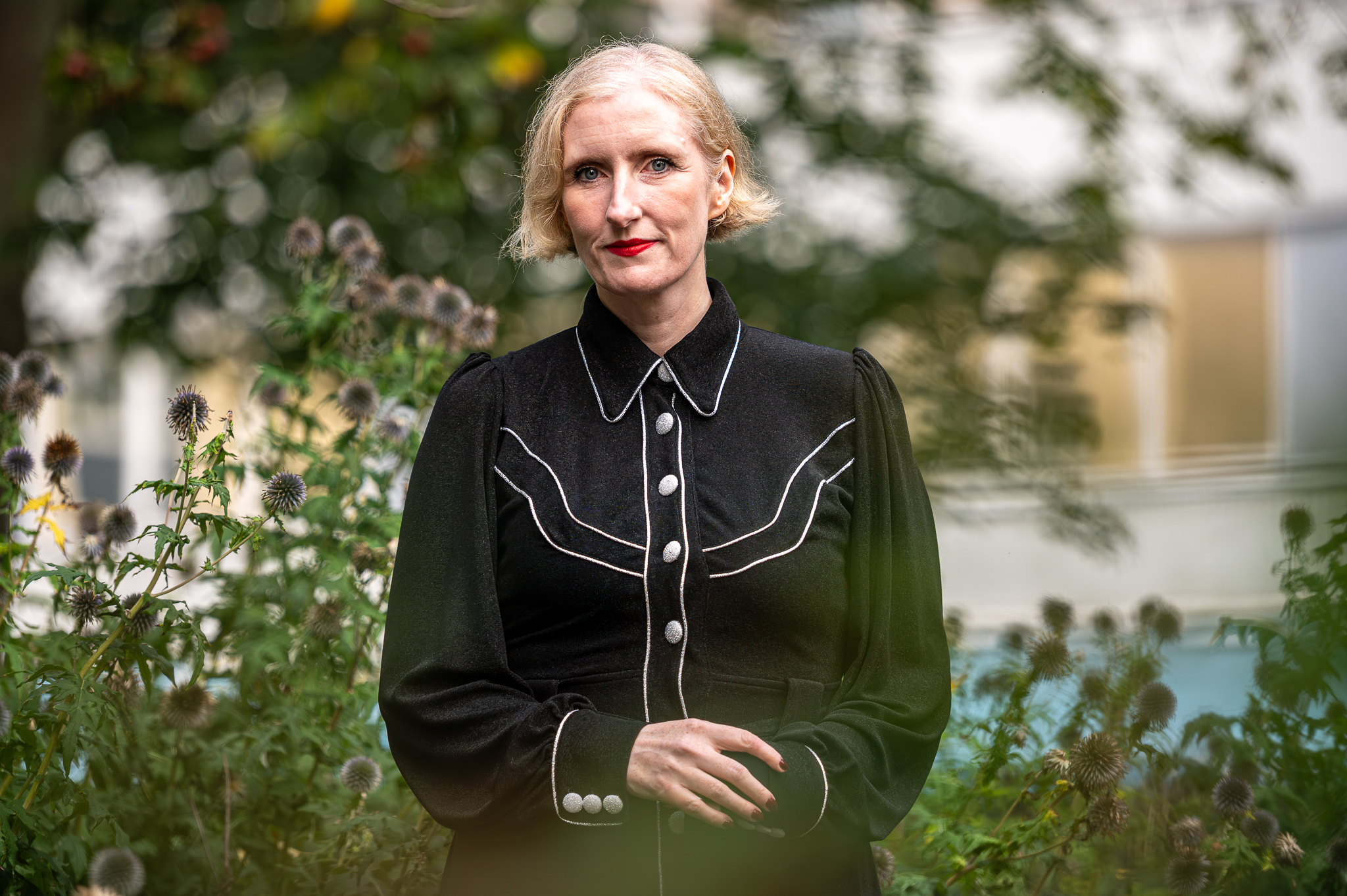
Fréwaka captures both the past and present wounds of Irish history in a tormenting way. Having directed the first Irish-spoken horror film, Aislinn Clarke believes that the cruelty found within Irish mythology reflects the local experiences of colonialism.
Seven nails by the door, an ominous goat, talismans hanged from a yard tree, a parade of masked villagers, a Virgin Mary glowing in the dark… Fréwaka (2024), a film directed by Aislinn Clark, combines Christian symbolism with Irish mythology.
The film centers on the intertwining stories of two Irish women of different generations. A Dublin-based caretaker Siobhán travels to a remote Irish village to take care of an elderly, isolated elderly woman named Peig. Peig suffers from agoraphobia, dementia and delusions of the imagined spirit world. Siobhán slowly finds herself sinking deeper into Peig’s delusions, wondering if there is a seed of truth in them.
Clarke didn’t need to do a separate background research for the mythological imagery of Fréwaka. She has been familiar with Irish folklore since early childhood.
‘’I grew up in the middle of these stories, this world. They are an integral part of who I am as a person.’’
Irish folklore has survived for centuries through oral storytelling traditions and has transformed through each temporal and cultural context. Clarke sees her film as a link in this chain of transmission.
In addition to folklore, Clarke was already familiar with the filming locations. The production crew unknowingly chose many locations that have ties to Clarke’s own life. The house that was used to depict Peig’s haunted home is in a way the film’s third main character. According to Clarke, she had a strong sense of déjà vu when the producer introduced her to the house for the first time. Later she found out that she had attended a house party there in her twenties. Another scene includes by coincidence a street where Clarke’s grandmother’s childhood home is located.
Clarke makes clear that Fréwaka is a film about Ireland and the Irish. The jovial appearance of Irish people hides a well of human suffering: mental health problems, addiction, self-harm…
These are partly due to transgenerational trauma. Behind this trauma are for example the Magdalene laundries, facilities where the Catholic church interred so called ‘’fallen’’ women and girls. The laundires were run by religious communities and they had the quiet blessing of the state. Tens of thousands of women have been estimated to have been interred into these facilities for varying reasons: sex work, being a victim of rape, being an orphan, breaking the then-relevant social mores…
The spirits that haunt Peig and Siobhán in Fréwaka are called the aos sí. In Irish folklore, they are not depicted as gentle elves but malicious and scary beings. Clarke has wondered about the cruelty of the aos sí since childhood. Nowadays she sees reflections of Irish history in the stories of the mysterious underground elves.
“I suppose we invented these mythical native Irish creatures, a colonised group of people, as a reflection of our own pain’’, Clarke says.
The title of the film, fréwaka comes from the Irish word that means “roots”. Facing one’s roots and past actions is an integral theme of the story. According to Clarke, traumatic historical events cannot be shrugged off or treated with occasional formal apologies. She thinks the Irish still have a lot of historical burden to come to terms with.
As a director Clarke can use her films to join the broader discourse of Irishness, although even the silver screen cannot always be used to depict the most painful subjects. The language of horror bypasses this dilemma in an interesting way.
“I think that horror films are the best genre to address these kinds of topics. Horror uses metaphors and the logic of dreams to address real world problems.”
Anssi Bwalya