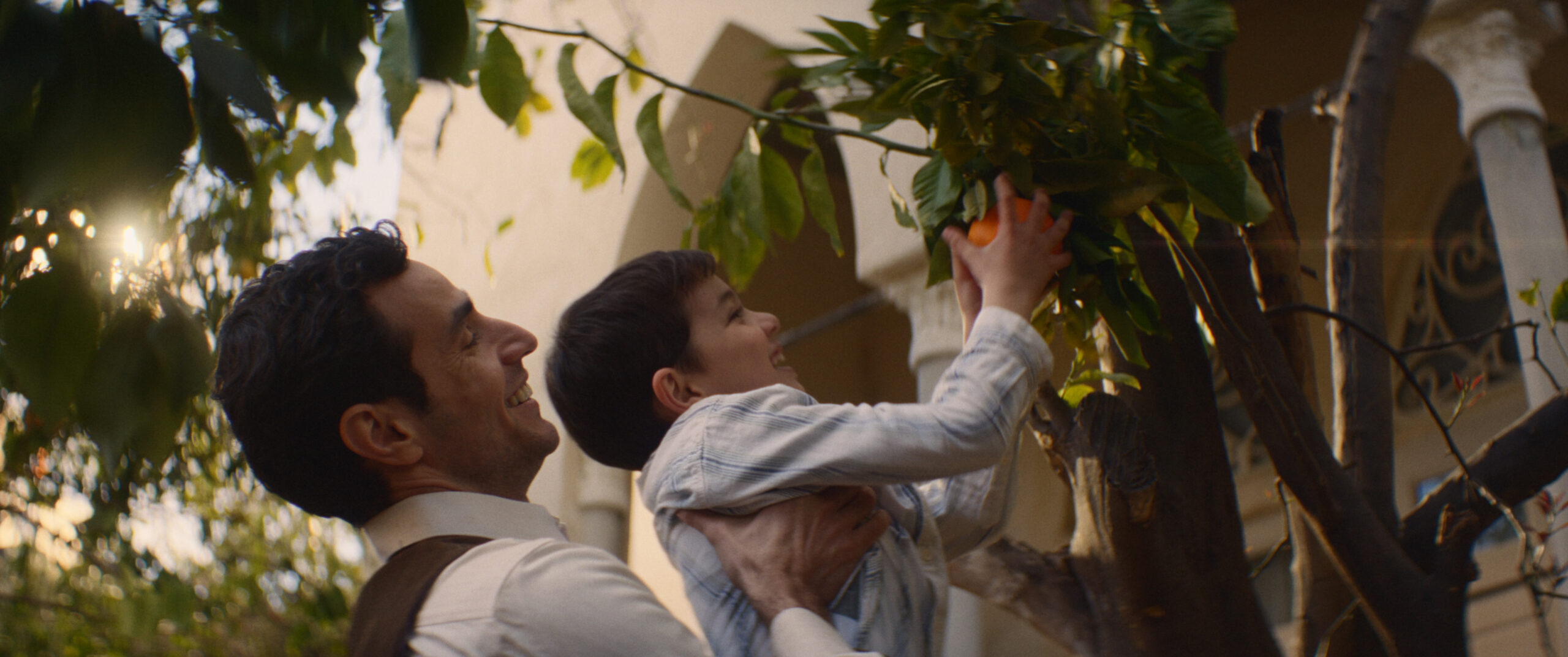
I was asked to write a text about the Free Palestine programming at the Love & Anarchy film festival. Most of the time I spend with Palestine happens while doing advocacy, which is to say, I mostly engage with Palestine intellectually. It’s all puzzle and strategy: What is the next step in getting us free. How do we take it?
Despite being an artist, I rarely – if ever – prioritise my artistic practice, save when given an assignment, when asked to by others. There is always something more urgent. In saying yes to Love & Anarchy Martta’s request – thank you Martta – I was excited to take time for art, rather than advocacy.For feeling, rather than thinking.
But then I put off watching the films. Part of me didn’t want to watch, because the pain I knew would be in them is what my skin and bones are made of, and I didn’t know if I could handle living it in another way. I was scared.
And yet, I said yes because I wanted to watch the films. I wanted to live it outside myself, through someone else’s art. I wanted to feel, “yes, that’s how it is. That is our story.” I wanted to be with the artists who made the films. While we are separated by occupation and displacement, we can be together in art.
While I knew that I would have a hard time watching the films, I truly did not know how hard. Having watched them, I did not know how to write about them. Because what is there to say?
Everything about Palestine has already been said. And the films speak for themselves. Yet here I am, writing. Finding what I want to say.
I want to make one thing clear: this is not a review. I am not interested in telling you what to think about the films, or even what I thought. I don’t even know if I actually want to talk to you at all, fellow R&A goer. I want to talk to the makers, and to the people in them.
I want to honour these films and the Palestinian story.
In Arabic, all commonly used phrases – like good morning, or thank you, or my condolences – have a response.
This is not a review. It is a response.
An attempt at saying thank you. An attempt at a conversation. An attempt at being together.
This is a dream.
~
Cherien, how to even begin talking about your film? It is as simple and as profound as the way you told our story. From now on, if anyone were to ask me to explain our history, how it feels to be Palestinian, and why we don’t let our pain go, nor give in, I would tell them to watch your film.
I felt it in my body. The line above about the pain being what my skin and bones are made of? I wrote that while watching your film. And somehow, it did help to experience that pain through something outside myself. Your work.
“They kill us and then want us to save their lives.”
And in the future, they’ll ask for our forgiveness. I wonder whether we will be able to forgive. Sometimes I even wonder whether we should.
“Do you feel our [pain]?” / “We live yours. Every day. We pay a price for what happened to your people. Until now, we pay it.”
If there was one line that encapsulates our story, it is this one. The relief I felt when it was said cannot be described.
“And ask for permission to visit my own home?”
One day, hopefully soon, you and I and everyone of us will no longer have to ask for any permissions on our ancestral lands. And I will invite you for mint tea in my garden.
Cherien, I now want to watch all your films. Thank you for making this one.
~
Sepideh, I was most scared to watch your film. You lost your friend. I am so sorry. In Finnish we say “otan osaa”, which in my Palestinian poet way I translate to “I carry a part of your grief together with you”.
Dear Sepideh, did you cry, as you were editing your film? Why do I even ask, I know you did, I saw you crying on a television show when they showed a clip of Fatma’s face. I am crying, trying to write this. Thank you for crying.
Fatma, we would have been friends. I want to hear more of your poems. We could sing together. At the beginning of the film, every second of looking at your face, I knew that you had been murdered. It feels excruciating to know, and unfair to think of while watching you smile. Your life is so much more than how it ended.
But then, while watching the film, the knowledge fades, and Fatma and Sepideh, watching your conversations, feels like watching my aunties talk, like watching family. I wish I could have made you tea. More than that I wish I could have made you laugh.
“A wish? … I wish to go to the city of the amusement park.” / “To which one?” / “Any one. Any.” / “Once the war is over, we have to do that together.” / “I wish.” / “I wish you can do it soon.”
Fatma, in Helsinki, I’ll take you to Linnanmäki, it’s so beautiful, I’m sure it would make you smile. There are colourful rides between rocks and trees. I would take you to ride the Ferris wheel, it goes so high that you can see the sea from the top, and the city all around. We’d ride the old wooden rollercoaster and scream with joy instead of pain. I’d have you taste any food you wanted, but if you want to know what I like, it’s the vegan soft ice cream.
Sepideh, if you ever come up here North, I’ll take you too. We’ll go in memory of her who was lost. And after crying, we’ll laugh, and hear Fatma’s laugh mixing with ours, as it should.
~
Areeb, I think you are a poet. Your voiceover to your mother is what stayed with me most from your film.
“I wish I was there, I have never in my life seen the snow. I wish I could see it. I’ve heard that it drifts in the air, that it’s very light.”
Ah Ahmed, when you said this, I thought to myself, come to Finland to see the snow. At its best it does drift in the air and is very light, and it also shines and glitters. But at its worst, it’s all wet and dirty and gets into your shoes, we call it “loska” here. But I guess now that you live in Sweden, you know all about that. Did the snow live up to your imagination? Would you miss it if you could move back to Gaza? I think I would miss the snow if I moved somewhere it didn’t exist.
“I think I finally get it, Mama. Like Ahmed, you had a dream, one that couldn’t live in a prison. You had to make sure that we were free to move. No matter the cost. Even if it was your smile. Even if it was our roots. My worry for Ahmed wasn’t if he’d get out, but what part of himself he’d leave behind when he did.”
Ahmed, I saw you make manakeesh in your apartment in Sweden. I make manakeesh too, when I want to feel closer to home. I don’t always get the dough right, sometimes it turns out tough, and I don’t know why. Do you have any tips for me? And where do you get your za’atar?
“I think the best you ever managed was to settle. One foot in the present, the other in a dream.”
I wonder if this is the case for all our parents, Areeb. The present being where they ended up outside of Palestine, in the West, where their children are safe and can grow up. The dream being … never having had to leave in the first place? Being able to go back? Both?
“The freedom Ahmed got by settling in Sweden, allowed him to visit Gaza, but not to stay. He got back to visit his mother’s smile and tears, her endless embrace. Maybe, for the last time. […] You saved me from that fate, Mama. You also told me, that day by the sea that I’m “one of us”. I want to feel grateful for that, instead of guilty, but I don’t know how to just now. Instead I watch Gaza […] and I wonder …”
You know, Areeb, I don’t know how to do that either, not feel guilty. For me, that’s not a new thing. I don’t know if I’ll ever stop feeling guilty.
~
The funniest scene was in your film, Arab and Tarzan, Nasser brothers. I don’t want to spoil it for anyone, because you know people are reading this even though in my mind it’s just us here, but you might know the scene I mean. With the one moment where someone says,
“I may be playing an Israeli, but I will not throw down the Palestinian flag!”
It is not the only funny moment in your film, it’s one of many. You showed the absurdity of our people’s humour. I was happy to recognise it.
“Your task is hard, but what you’re doing is a form of resistance. The method differs, but the goal is the same. Right?” […] “You can resist with weapons, but also with images.”
I wonder if we Palestinian artists ever feel like we can make art for art’s sake. Like I said at the beginning, to the general public, I don’t prioritise my art practice. When I do, it’s because I’m asked, and when I’m asked, it’s because of Palestine. You’re resisting with these images. What would we make without our struggle? I don’t think art requires our level of suffering.
“Think we’re in a movie?”
You know, often I do. But not in the cool way, where sometimes the light is perfect and the right song comes on in my headphones and the city belongs to me. We’re in a movie in the way that such horrors as are happening now and have happened over the decades shouldn’t be real. Horrors we see in historical fiction, or in a post-apocalyptic universe, not live, happening now, to be viewed on our phones.
“It will end.”
Inshallah ameen. It will end, and we will go home, and we won’t have to resist anymore. And I will tell you a joke that will make you laugh, and we can choose to make art that has nothing or everything to do with what our people went through.
And this will no longer be a dream.
Author’s notes:
I would like to thank the Love & Anarchy film festival for giving space in their programming to Palestinian filmmakers and Palestinian stories, with several screenings of each film. In a world where our voices are constantly silenced, you are choosing to put them on the big screen. Thank you.
Each of the four films written about above has a screening left during the final festival weekend. I encourage you to go see them and talk about them with the people in your life.
Find the exact screening times here.
I would also like to thank the Love and Anarchy festival for signing the Finland Against Apartheid pledge as one of the first signatories back in 2021, and in doing so joining the Palestinian-led cultural and academic boycott movement as set out by PACBI. I would like to publicly encourage the festival to take the next step in their commitment to Palestinian liberation in two ways. Firstly, by making your commitment to the Finland Against Apartheid pledge visible and clear in your own communication and on your own pages and platforms. And secondly, by starting the process of making your organisation and the festival into an Apartheid Free Zone.
Finally, I urge other festivals and cultural institutions in Finland to take note of Love & Anarchy festival’s commitment to Palestinian liberation and to emulate it. Art does not exist in a vacuum; it exists in a world where injustice is all around us and where we have the choice to either fight it or turn our face away from it. The Finland Against Apartheid pledge continues to be open for signatures, and the Palestinian liberation movement continues to be here to welcome you with open arms.
Join us.
Free Palestine
Eugenie Touma van der Meulen
Eugenie Touma van der Meulen (they/she) is a Palestinian artist and activist. Their practice centres around words, speeches, and conversations, performance art, and community. Thank you for spending your time with their art.