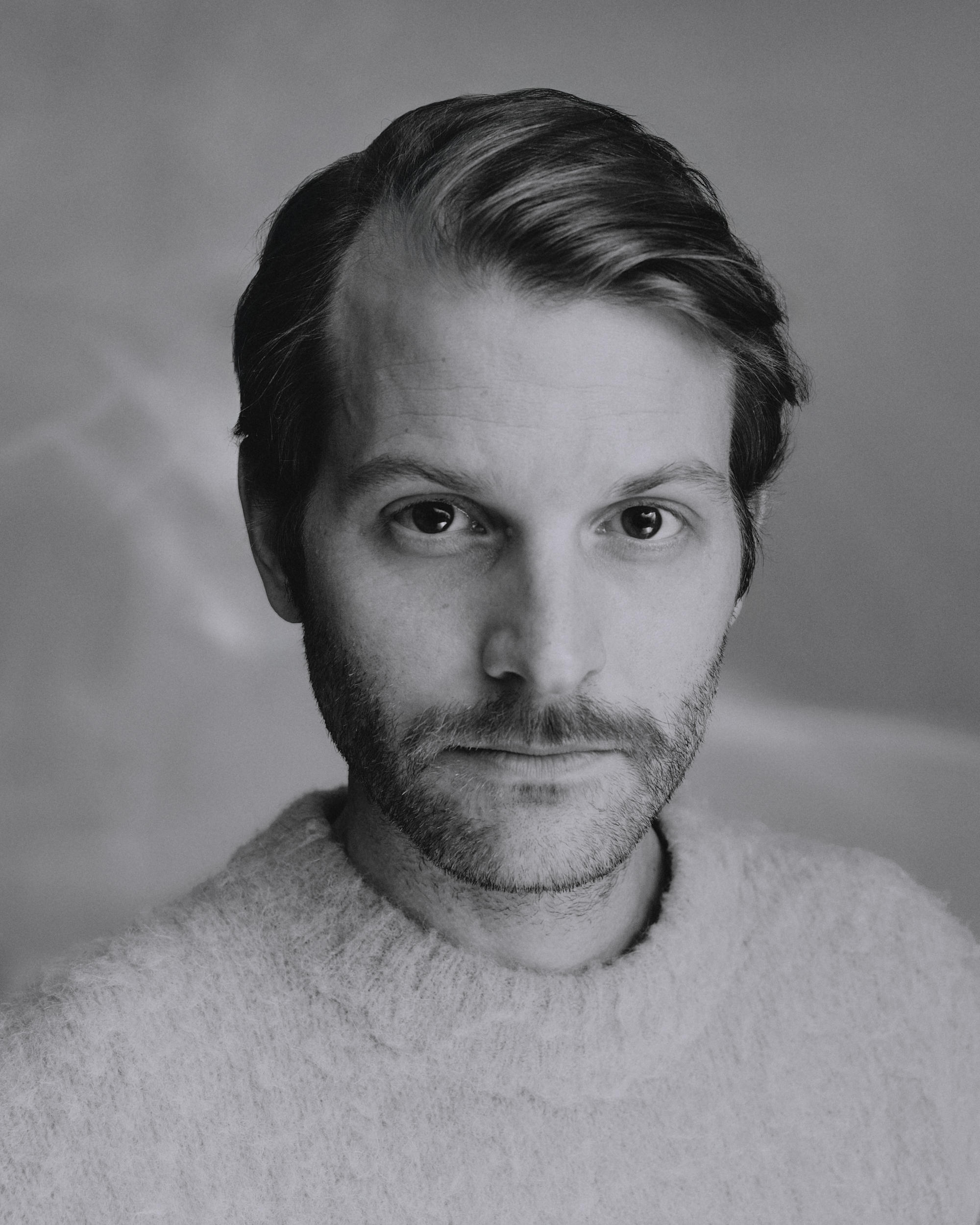
Magnus von Horn’s latest film, The Girl with the Needle, strikes an unsettling yet brilliant chord on many fronts. Both intimate and dark, the film looks directly into the most disturbing corners of human nature.
As a director and screenwriter, von Horn has always thrived in shedding light on the gray areas of human psychology, crafting narratives that invite the audience to sit with moral ambiguity rather than offering easily digestible storylines. His first feature, The Here After (2015), confronted viewers with the dilemma of whether a community could—or should—find empathy for a 15-year-old who has returned home after committing a violent crime. In The Girl with the Needle (2024) von Horn once again raises uncomfortable questions, this time through the story of Karoline, a woman in 1918 Copenhagen who resorts to the unthinkable in order to survive. The film was nominated for Best International Feature Film at the 97th Academy Awards and received widespread acclaim across Europe—particularly for the depth of its characters, an element that remains von Horn’s focus.
From 9–11 May 2025, von Horn will lead the third edition of the Söderlångvik Masterclass, where a select group of Nordic screenwriters and directors will have the opportunity of gaining insightful guidance on how to write, connect with, and develop multilayered characters. With his deep understanding of nuanced storytelling, von Horn is the ideal mentor for the weekend. How does he see the process of developing a character?
Magnus von Horn: In character creation, eventually, you develop a Frankenstein’s monster of sorts—a character with their own set of rules and a life of their own. And at some point, you can’t puppeteer them anymore. No matter what you want them to do, you can’t force it.
In that sense, I could say that every belief I have about filmmaking is intrinsically connected to the internal story of the main character. That is why they are central to my process—or as it’s called, character-based storytelling, where every question about the filmmaking process can be answered through their story.
For me, it’s about constructing the main character in a way that gradually extends beyond just this one person, shaping the style, camera movement, or even the function of other characters.
With this focus on character-based storytelling, directors and screenwriters in the masterclass will dive into how to relate to their characters, and find their nature beyond the script. When writing a character, does von Horn need to know with utmost certainty who he is writing, or is it a journey that unfolds as he writes?
MvH: Without a doubt, it is a discovery. As I start writing, I might have some idea of what the story will be about, but that’s it. Perhaps my process centers around “cracking the code of the main character”, while at the same time, I don’t want it to be a rigid, mathematical approach— because, in fact, it’s a journey that feels very much alive.
And truthfully, it doesn’t matter if you don’t have all the pieces in place from the beginning, because you also need to juggle many other factors: the story in itself, the audience, and the challenge of balancing the mundanity of everyday life with a powerful narrative—one that pushes the story forward and makes it compelling for an audience with their own expectations. That’s the real challenge for me.
The Girl with the Needle is a horror story—one I wanted to blend with a structure rooted in real life, where things are simply happening. This is where the journey of the character begins to take shape. For a long time, we pondered how to open the film: how do you avoid making it too obvious? How do you hold back on presenting elements that will be used later?
This one of the most important aspects, the opening scene of a film: what is that scene? In relation to the character, this is essential: where do you find an entry point to the protagonist? How do you establish anything in a first scene when you don’t have tension yet?
A key feature of von Horn’s cinema is the relation between real life and dramatic elements that keep the viewer on edge. In The Here After (2015), the audience is presented with a morally complex story about the innocence of adolescence versus the crude reality of it being tainted by violence. The weight of these opposites raises an important question: when crafting a character, does von Horn have the viewer’s empathy in mind, or does he leave it to them to find it on their own?
MvH: I believe that as long as I don’t try to force a character into the box of being either “good-good” or “bad-bad”, people will eventually feel that complexity and empathy on their own. Because, again, human beings are complex: we do one thing one day, regret it the next, and then do something completely different. We are nuanced, and that’s what fascinates me. People are not just one thing, right? That layered nature is what I try to capture in filmmaking.
One premise I like to follow is: if I feel empathy, then others will too. In that sense, I use myself as a kind of thermometer. And while that might sound like a one-man show—me thinking and doing all the writing—it’s of course, far from that.
Von Horn emphasises that filmmaking is far from a one-man show—it is a deeply collaborative effort. In particular, his longtime producer and cinematographer have been by his side for years, developing a relationship built on trust and a shared desire of making something meaningful together. At the same time, it is unique to him and his creative process that his work consistently delves into dark, complex characters. What draws him to these difficult narratives?
MvH: Rather than analysing what draws me to these stories, I like thinking about why I think it’s important to pay attention to them. In filmmaking I feel we are often stuck—not always, but sometimes—in this binary storytelling of ‘good versus bad’. Since all of my films are based on true crime stories, I read a lot of material that goes beyond the media: court reports, and so on. When you dive into these, you uncover a lot of nuances—in essence, you find a human being.
On the other hand, mainstream media often presents these stories in a simplified way: tiny articles or front pages that are easily digestible. What does this give us? It’s much more comfortable to read these short news pieces, though, because they don’t touch us deeply; they do not complicate us or raise questions. They simplify human nature.
So I believe that there’s still so much left to explore in filmmaking: diving deep, recognising that we are complicated through these complex stories, has the potential to make us more empathic than a simplified image.
The Söderlångvik Masterclass will guide professional screenwriters and directors who are at the beginning of their feature-length film careers into asking the right questions and finding their own path when it comes to creating their characters. After three feature films with acclaimed success, how has von Horn’s process of character creation transformed over the years?
MvH: Something I’ve learned over the years is that the process fundamentally entails to let go of yourself. When you start writing, it is about you, and your feelings. But the goal is to move past that, to get to a point where I understand: it doesn’t matter what I feel.
What matters is what the main character is doing, what her particular journey is right now, and the best way to tell her story.
In this sense, I believe that with every film, I get better at telling a story. Looking back at my first film, it feels very dogmatic, right? As if I was clinging to a certain form or approach, even at the risk of falling into boredom. That first film was very static, with a strong visual language, whereas the second one is the opposite—more dynamic, and, in a sense, freer. Nowadays, I am much more interested in finding the way—not necessarily the one I personally want, but the one that fits the story better.
***
The open call for the third edition of the Söderlångvik Masterclass runs from 11.3 – 1.4. Read all about it, and apply here.