The second week of the festival has delighted, disturbed, amused and fascinated visitors, thanks to the abundant program of movies and side events. Topical and timeless subjects about humanity, technology and storytelling have invited us into theatres, sparking discussions and inspiration.
On the relationship between books and cinema
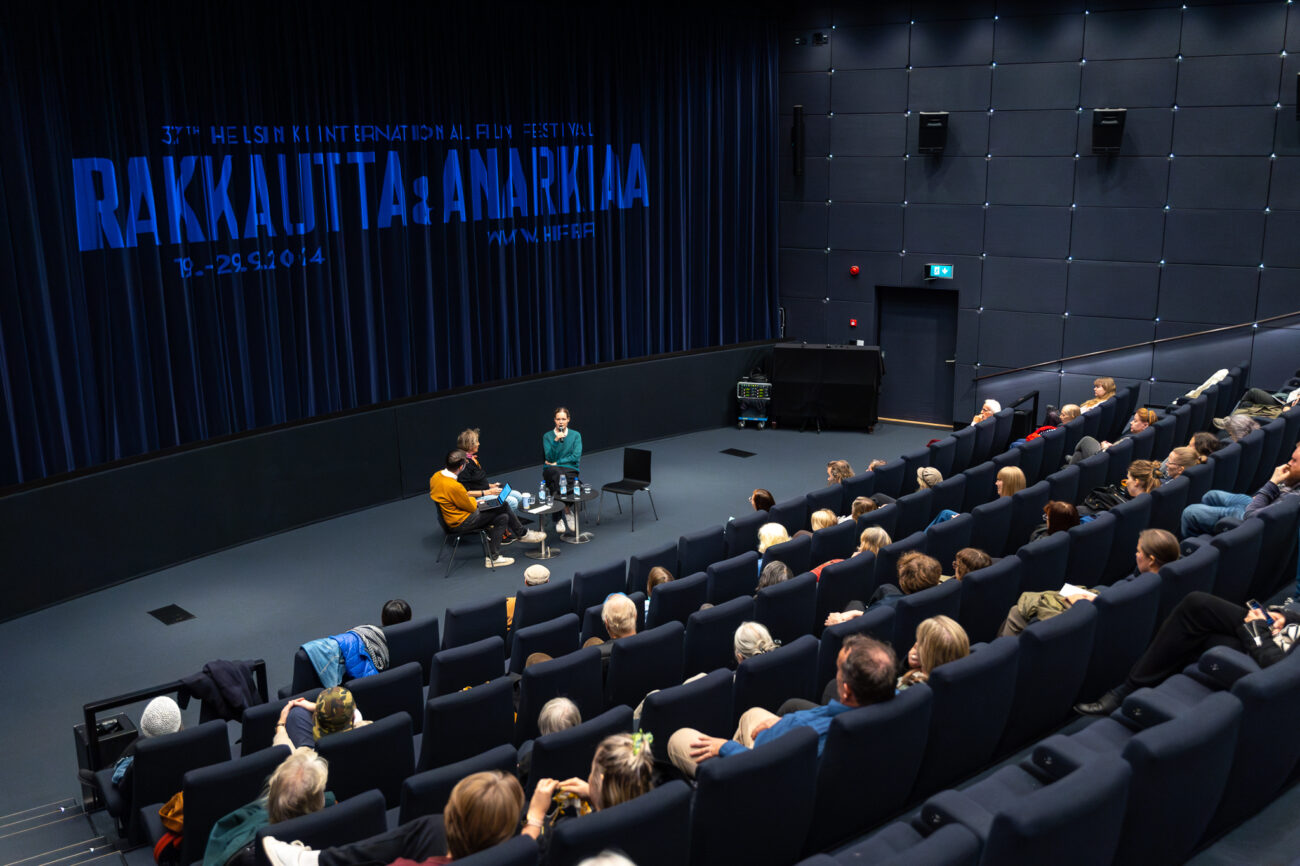
Sunday at Kino Regina began with a discussion on the relationship between books and films, organised by Love & Anarchy festival in collaboration with Helsinki Book Fair. Together with Helsinki Book Fair’s programme director Ville Blåfield, director Pirjo Honkasalo and poet, screenwriter Juuli Niemi discussed the differences between reading and watching, adapting a book into a film, and the themes that are important to convey through art.
Honkasalo remarked that there is nothing particularly current or topical in her new film Orenda, “except that people are always topical.” We also learned that Niemi is currently working on a script for a TV series. The speakers shared their insights on the principles of adapting books into films: a feature film is more the size of a novella than a long novel.
“Even my mother could make a film with AI”
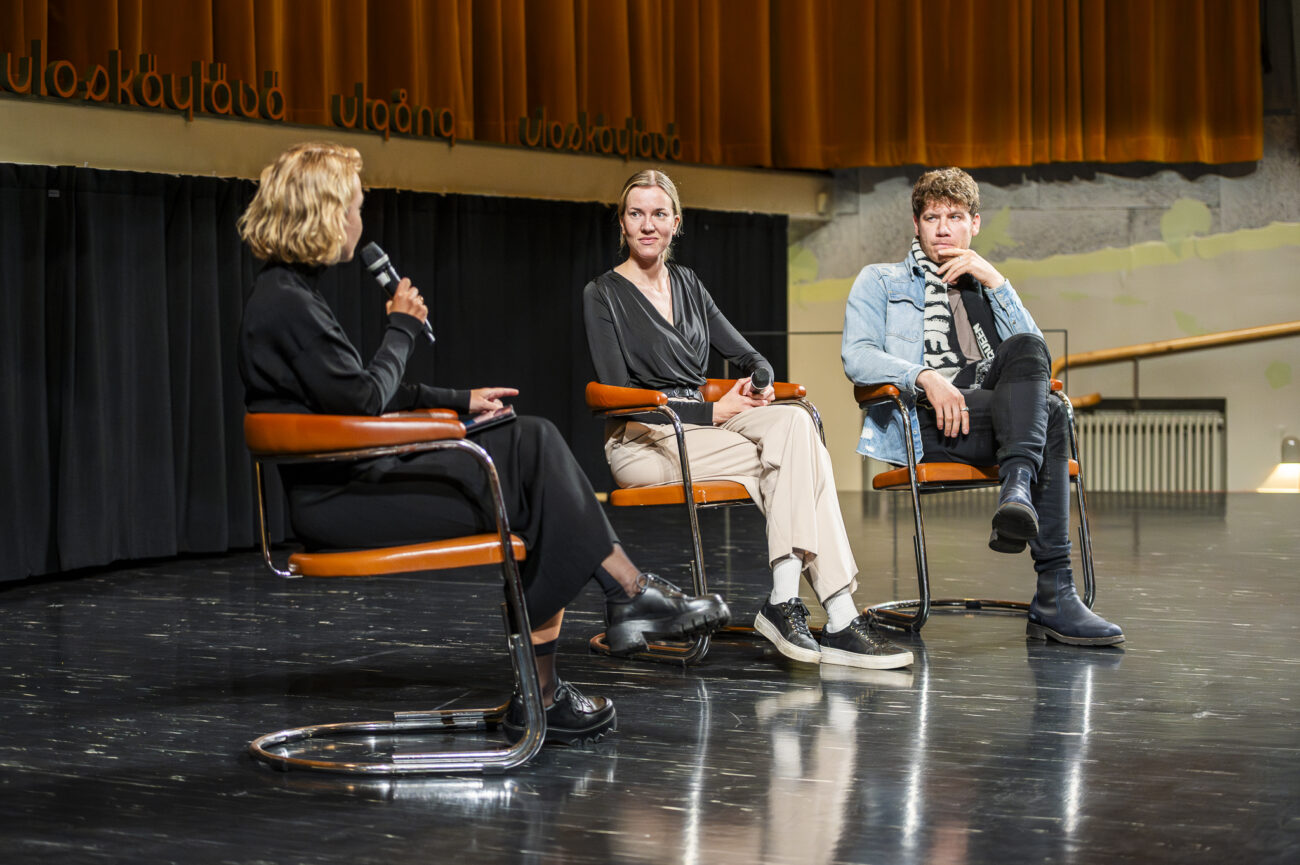
In Bio Rex the Sunday night was all about artificial intelligence. In the “AI in Filmmaking” screening we saw a collection of short movies that have been created with significant help of AI. Discussions on AI often revolve around fears and threats, but the post-screening discussion took a more inspiring perspective.
Design director and director of the Kalevala short film, Umberto Onza, and CEO of Blockbusters Gang, Emma Ilves, both agree that by using artificial intelligence the process of movie making may become lighter, faster and more efficient. Onza claims that even his mother could make a film with the help of AI – not necessarily a good one, but a film nonetheless.
There are multiple ways of using AI, and neither of the panelists are afraid of its growing potential in the film industry. Ilves believes hybrid productions are the next step, as there are many uses for AI in filmmaking. Onza predicts that AI could become a new category in film – similar to CGI, despite initial fears that it would replace traditional style of film.
Ilves wants to encourage filmmakers to be wild and use their creativity, along with artificial intelligence, to create new worlds on screen. Onza also hopes for more fun and inspiring movies created with AI. “Embrace the weird,” the panelists advise.
Mega Gala filled the house
On Tuesday, the brand-new Mega Gala featured Francis Ford Coppola’s self-financed dream project, Megalopolis. Love & Anarchy’s artistic director, Pekka Lanerva, introduced the much-discussed film.
Megalopolis has divided opinions, but there is something magical and inviting about the piece, as it has been filling theatres at various festivals. The film is Coppola’s passion project, which has been in the making for over forty years. Known for masterpieces such as The Godfather (1972) and Apocalypse Now (1979), the director has once again refused to compromise, creating this epic film excluding the control of traditional production companies.
“Megalopolis is a feast for the senses and full of ideas. It represents Coppola’s dreams becoming reality,” Lanerva summarised.
Volunteers keep the festival spirit alive
“Volunteering is a great way to see the festival from the inside,” say Sara Güven and Sami Saramäki, who work at the festival info desk.
Working at the festival, especially at the info desk, is social and offers the chance to meet other movie enthusiasts. “You need to be customer service oriented for this job, as we help both festivalgoers and other volunteers,” Güven explains. Their tasks are, for example, giving out passes and T-shirts to volunteers and answering questions about the programme and other concerns.
“This festival is one of the highlights of my year and really defines my autumn. The programme is always exceptionally well curated, which makes it special even on an international level. I was a festivalgoer for a long time, but I wanted to experience the other side of the counter. After my first volunteer experience, I was sold, and now it’s my fourth year volunteering,” Saramäki shares.
Jemina Nyman, who works as a “special task force” filling in for other volunteers, is volunteering at the festival for the first time. She has worked at the festival office and helped set up the volunteers’ break room.
“The festival has left a very positive impression on me. Especially now that the festival has officially started, the atmosphere has become more relaxed and the volunteers are doing a great job maintaining the festival spirit,” Nyman says.
There’s also time to watch some films. Güven has already seen six films, Nyman four. Saramäki is just about to dive into the festival’s offerings. Volunteers are known for being especially eager moviegoers, as nearly all of them are film enthusiasts. “The best part of the festival is that it gives people the chance to discover something completely new with really low effort. You could call it a ‘gateway theory,’ where one surprising film experience can open up a whole new world,” Nyman concludes.
Japanese humour lands in Helsinki
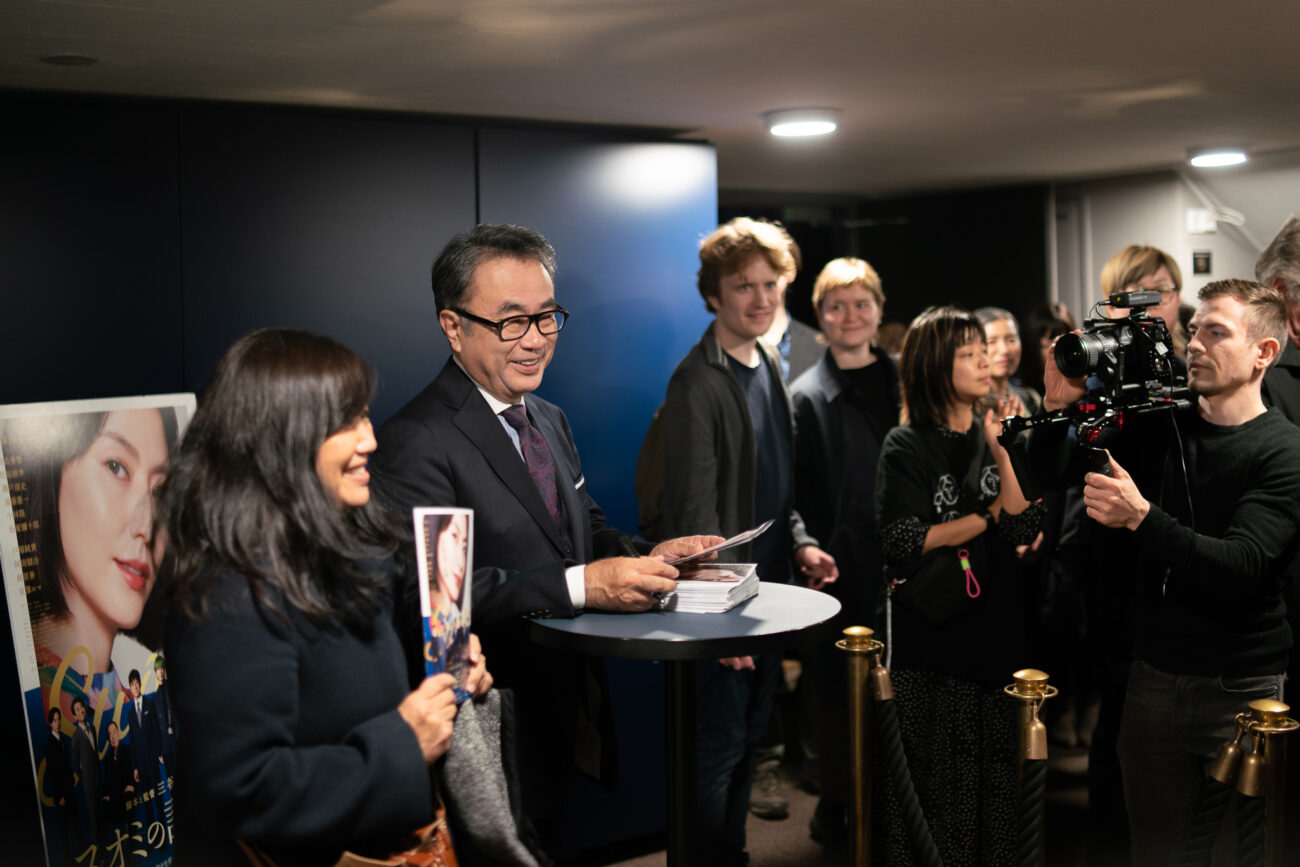
On Tuesday, Kōki Mitani’s latest film All About Suomi (2024) was seen at Maxim, with the director himself and other filmmakers making an appearance. The film tells the story of a missing woman, Suomi, whose former partners gather and realise that she had acted like a different person with each of them. The movie is a mix of Wilder-esque comedy, thriller, and even musical. But how does all this connect to Finland?
“I played a DVD and in the language selection I noticed the word suomi. I thought it sounded like the name of a Japanese woman. I wanted to make a film that used the word in the title,” the director explained. Similarly, the word Helsinki sounds rhythmic in Japanese, so Mitani decided to use it frequently in the film. In fact, even so frequently that it inspired him to create a musical scene for the movie.
After the screening, the director praised the warm reception from the Finnish audience. “The audience’s reactions were even more enthusiastic than in Japan, for which I’m very grateful,” Mitani said. “When I was writing the screenplay, I didn’t expect the film to turn out this good. It is as good as this festival deserves.”
What does Mitani, visiting Helsinki for the first time, actually think of the city featured in his film? “Helsinki reminds me of Japan. People are warm, yet a bit shy and reserved.”
And has Mitani had the chance to taste Koskenkorva yet? “Actually, I don’t usually drink alcohol at all. But since the screening went this well, I might give it a try tonight,” Mitani laughs.